
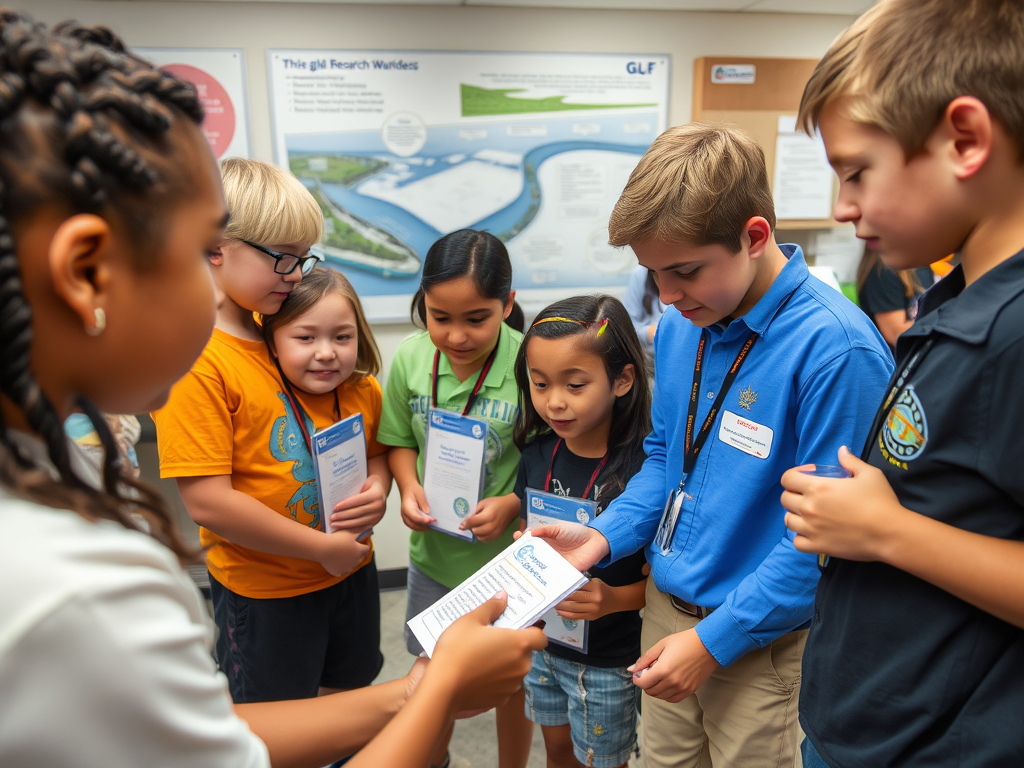
WASHINGTON — In a major effort to cultivate environmental awareness and future scientific leadership among young learners, the Gulf Research Program (GRP) of the National Academies of Sciences, Engineering, and Medicine has awarded more than $4.9 million to support nine place-based education initiatives for students in grades K-8 throughout the Gulf Coast region.
These projects aim to create a new generation of informed citizens, scientists, and community leaders equipped to understand local challenges and develop practical solutions. By strengthening scientific understanding, environmental responsibility, and problem-solving abilities, the initiatives foster direct engagement with pressing issues such as water quality, climate change, biodiversity loss, and disaster resilience.
The funded initiatives integrate hands-on experiences with advanced learning tools such as modeling, ecological monitoring, 3D technologies, data analytics, and virtual reality. Students will engage in activities that promote critical thinking, creativity, and stewardship of their local ecosystems.
“These initiatives integrate environmental awareness with technical learning, empowering students to become future leaders and active problem-solvers within their local communities,” said Karena Mothershed, director of GRP’s Board on Gulf Education and Engagement. “By connecting education with real-world environments, students begin to see themselves not only as learners but as innovators shaping the future of the Gulf region.”
Below is an overview of the nine awarded projects:
Guardians of the Glades: Exploring South Florida’s Ecosystem Health from Swamp to Shore
Project Director: Lisa Milenkovic, School Board of Broward County, Florida
Award: $629,236
This immersive program enhances environmental understanding among elementary students in Broward County while spotlighting critical ecological challenges in South Florida, particularly within the Everglades and Gulf Coast. Many students in high-need schools have limited access to natural areas, making this initiative vital in building connections to their environment. Through place-based learning focused on keystone species, ecosystem survival, and scientific literacy, students actively participate in hands-on activities, project-based learning, and community events like Everglades Day. The initiative nurtures environmental stewardship and encourages students to envision themselves as protectors of local ecosystems.
SEMILLAS: Sowing Environmental Multilingualism
Project Director: Ayca Fackler, University of Missouri
Award: $427,478
This collaborative program between the University of Missouri, Mississippi State University, and the Starkville Oktibbeha School District addresses the intersection of environmental education and multilingual learning. With 70% of students in this district coming from minority and economically disadvantaged backgrounds, many face disproportionate risks from hurricanes, floods, and water contamination. The initiative equips fourth and fifth graders to analyze the impact of climate change on water systems through culturally responsive pedagogy. By combining environmental awareness with language inclusivity, SEMILLAS empowers students to act as advocates for sustainable water management and climate resilience in their communities.
Grounded to Grow: Student-Led Green Infrastructure
Project Director: Hayley White, Pontchartrain Conservancy
Award: $227,300
This three-year program enables fifth graders at a Title I school to research, design, and implement green infrastructure projects, such as rain gardens and permeable pavements, directly on their school campus. Through classroom learning, environmental data collection, and collaboration with experts, students develop solutions to stormwater challenges while gaining experience with scientific inquiry and engineering design. Teachers also receive professional training to sustain environmental education beyond the program’s duration, ensuring long-term community impact.
Youth Envision II: Building Coastal Community Resiliency Through Youth Empowerment
Project Director: Diane Maygarden, University of New Orleans
Award: $562,015
Youth Envision connects students in grades five through eight with Louisiana’s coastal ecosystems, focusing on water management, coastal erosion, and community resilience. Blending classroom instruction with field-based experiences, students learn how environmental systems interact with human activity. Younger students engage in schoolyard investigations, while older students examine broader ecosystem issues. The initiative encourages innovation as students propose and implement local resilience strategies, ultimately building leadership skills and civic responsibility.
Alabama Gulf Coast Resiliency Project: Sustainability, Full STEAMM Ahead
Project Director: Jessica Sampley, Gulf Shores City Schools
Award: $733,024
This large-scale K-8 initiative integrates science, technology, engineering, arts, mathematics, and medicine (STEAMM) with environmental stewardship. Over 2,500 students and 52 teachers will collaborate on place-based sustainability projects aligned with academic standards. The program includes the Gulf Coast Sustainability Symposium, where students present research, participate in competitions, and engage with industry experts. Through practical problem-solving and career exploration, students gain confidence and skills to pursue environmentally responsible futures.
Enhancing Water Quality and Human Health Knowledge on the Gulf Coast in South Texas
Project Director: Ioana Pavel, Texas A&M University-Corpus Christi
Award: $670,269
With drought conditions and frequent boil-water advisories affecting South Texas communities, this project engages more than 600 fourth to seventh graders in water science and conservation. Students and their families will learn how to collect, test, and purify local water samples from homes, schools, and beaches such as Padre Island National Seashore. Field activities include coastal habitat cleanup and visits to water treatment facilities. A “Water Fair” will showcase student findings and highlight community-driven approaches to addressing water scarcity and health risks.
Sustainable Solutions Challenge: Empowering K-8 Youth to Protect the Gulf Coast
Project Director: Rachel Gisewhite, University of Southern Mississippi
Award: $748,927
The STEM Coastal Camp engages students in grades three through eight in exploring coastal challenges such as erosion, habitat degradation, and wildlife conservation. Camp activities range from marine animal care at Ocean Adventures Marine Park to shrimping trips that highlight sustainable fisheries. Students explore predator-prey relationships, climate resilience, and barrier island dynamics before participating in design-thinking exercises to create coastal protection prototypes. Final projects, such as resilience blueprints and public awareness campaigns, empower youth to advocate for environmental solutions.
Inquiry to Action: Emerging Civic Scientists Leading Waste and Water Solutions
Project Director: Stephanie Gray, Children’s Environmental Literacy Foundation Inc.
Award: $229,402
This initiative extends the Civic Science: Inquiry to Action framework to younger students in grades three through five in the Houston-Galveston region. Through outdoor learning, waste audits, waterway cleanups, and sustainability projects, students investigate how everyday practices affect environmental health. Data-sharing sessions with schools in Louisiana and Greater Houston help students compare findings and develop a sense of regional collaboration. Efforts include building school gardens, improving composting systems, and reducing waste entering waterways.
Gulf Futures 3D
Project Director: Kiara Lovett, St. Petersburg Housing Authority
Award: $740,860
By establishing 3D technology labs in St. Petersburg Housing Authority communities, this program provides youth with access to cutting-edge scientific tools. Equipped with 3D printers, scanners, and virtual reality devices, students analyze regional environmental issues and design innovative solutions to Gulf Coast challenges. Through partnerships with local organizations such as Tampa Bay Watch and St. Petersburg College, participants develop STEM skills while designing sustainable community-based projects that address real-world environmental concerns.
Founded in 2013 as part of legal settlements from the Deepwater Horizon disaster, the Gulf Research Program continues to focus on enhancing offshore energy safety, protecting ecosystems, and improving community well-being. Operating under the National Academies of Sciences, Engineering, and Medicine, the program builds scientific knowledge, supports innovation, and strengthens local resilience for the long-term benefit of the Gulf region and the nation.
Through these nine transformative projects, the GRP is investing in the minds and futures of young people who will one day lead critical environmental efforts. By teaching students how to understand, protect, and improve their local ecosystems, these initiatives are laying the foundation for a more sustainable and resilient Gulf Coast.
Leave a Reply