
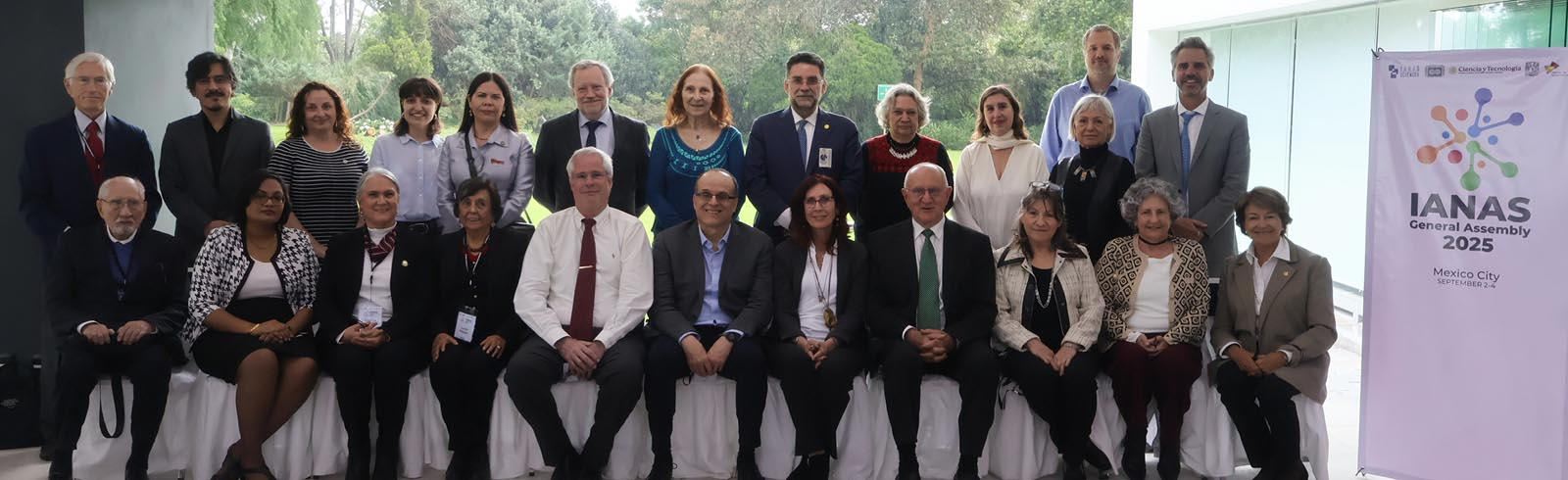
Scientific leaders from across North, Central, and South America recently convened at the General Assembly of the Inter-American Network of Academies of Sciences (IANAS), with a shared focus on reinforcing the role of science in addressing the region’s most pressing social, environmental, and technological challenges. The gathering was organized by José Antonio Seade Kuri, president of the Mexican Academy of Sciences, and held at the National Autonomous University of Mexico.
Established in 2004, IANAS brings together 23 national science academies from across the Americas. Its mission is to advance scientific expertise, foster excellence, and support sustainable development throughout the region. The organization leads several thematic initiatives that focus on essential areas such as water resources, women’s participation in science, science education, energy innovation, and most recently, the promotion of sustainable strategies in the Amazon basin — one of the world’s most critical ecological regions.
Karen Strier, a member of the U.S. National Academy of Sciences and co-chair of IANAS since 2022, emphasized the organization’s commitment to advancing scientific collaboration and regional resilience. In her address to the assembly, she underscored the pivotal role of science and technology in tackling global issues. She noted that IANAS exists to strengthen the scientific foundations necessary for resilience, prosperity, and equity across the Americas. Strier highlighted the collective responsibility of the scientific community to confront global challenges with informed solutions.
She also pointed to IANAS’s increasing engagement in international policy dialogues. The organization contributes to the S20 — the science and technology engagement group of the G20 — and collaborates with other key institutions on global climate-related initiatives. One notable example is its partnership with the Brazilian Academy of Sciences in co-organizing an upcoming pre-COP30 conference titled A Scientific Call for COP30: Science Academies United for Climate Action, scheduled to take place this October in Manaus.
Helena Nader, president of the Brazilian Academy of Sciences and outgoing co-chair of IANAS, reaffirmed the urgency of mobilizing scientific voices in the lead-up to COP30 in Belém. She emphasized the importance of a unified scientific message that draws attention to the interconnected crises of climate change, deforestation, biodiversity loss, and social inequality. According to Nader, the upcoming gathering in Manaus will serve as a symbolic and strategic platform to demonstrate that scientific collaboration is essential for shaping policies that promote a sustainable and just future.
Delegates from Latin American countries emphasized that IANAS plays a vital role in creating a collaborative space where scientific institutions can exchange knowledge, share resources, and build collective strategies. They stressed that these interactions not only strengthen scientific infrastructure but also contribute to broader goals such as democracy, equality, and multilateral cooperation. Participants expressed optimism that stronger ties across the network would lead to more inclusive development and regional solidarity.
The General Assembly also addressed critical topics such as reducing disparities in research capabilities across countries, expanding IANAS programs, and nurturing the next generation of STEM professionals from across the Americas. Leaders discussed the importance of developing programs that support young scientists and create more equitable pathways for emerging talent.
During the meeting, Karen Strier was re-elected for a second term as co-chair of IANAS. She will now serve alongside Alberto Gago, president of the National Academy of Sciences of Peru, who was elected to replace Helena Nader as the new co-chair. Gago underscored the importance of placing science at the heart of policymaking. He stated that one of IANAS’s key objectives is to ensure that governments view science as a critical decision-making tool, leading to evidence-based, forward-looking policies that promote long-term societal well-being and sustainable development.
The assembly concluded with a shared commitment among member academies to intensify regional cooperation, elevate scientific voices in global conversations, and promote knowledge-driven solutions for the complex challenges facing the hemisphere. Through joint initiatives and strengthened partnerships, IANAS aims to continue building a future where scientific evidence plays a central role in shaping equitable, sustainable, and resilient societies across the Americas.
Leave a Reply