
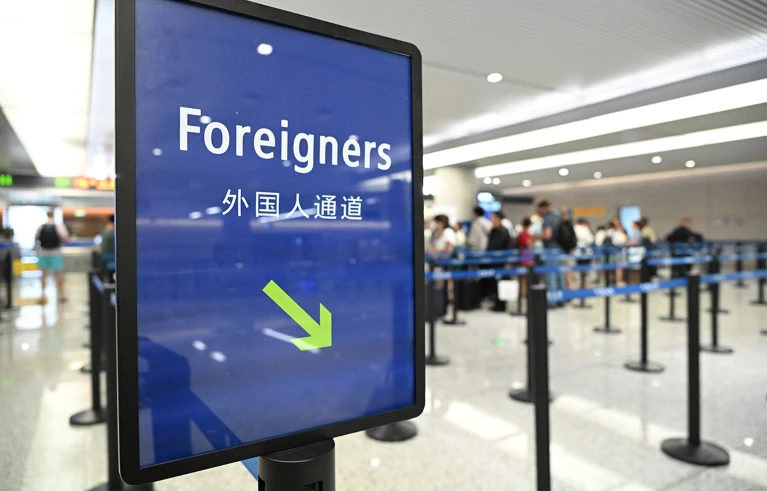
China has taken a significant step toward attracting global scientific talent by launching a new visa program designed specifically for young foreign researchers in science, technology, engineering, and mathematics (STEM). Known as the K visa, this new pathway allows qualified individuals to move to China without first needing to secure a job offer—a notable shift from previous visa policies.
Until now, foreign researchers who wanted to work in China’s STEM sectors were required to find employment before applying for a work visa. The K visa removes this major hurdle, signaling Beijing’s intent to position itself as a global magnet for innovation and high-end talent.
According to Jeremy Neufeld, director of immigration policy at the Institute for Progress in Washington, D.C., China’s new initiative represents “a serious bid” to attract the world’s brightest scientific minds. Other nations such as South Korea and Singapore have implemented similar visa schemes to compete in the global race for STEM talent, but China’s entry into this arena marks one of the most ambitious efforts to date.
Officially introduced on October 1, the K visa has not yet opened for applications, and specific details regarding eligibility remain limited. Early information suggests that criteria will depend on age, education, and work experience. Candidates holding at least a bachelor’s degree in STEM from a well-known university—either in China or abroad—will be eligible, as will those engaged in teaching or research within STEM fields.
A Strategic Step in China’s Talent Drive
Experts view the K visa as part of China’s long-term plan to strengthen its position in strategically important technologies such as artificial intelligence, robotics, and new materials. Yuen Yuen Ang, a political economist at Johns Hopkins University, notes that as U.S. funding for science contracts, Chinese policymakers see a unique opportunity to attract top-tier researchers, especially in fundamental science.
Lu Fengming, a political economist at the Australian National University, describes the visa as “a big step forward.” He points out that most existing Chinese visa types require employer sponsorship, making this policy an unprecedented move to lower entry barriers for global scientists. “Given China’s ambition to become a global innovation hub, this policy is both strategic and timely,” Lu adds.
Despite being the world’s most populous nation, China’s foreign population remains remarkably small. In 2023, foreigners made up just 0.05% of China’s population, compared with 4.9% in South Korea and 14.3% in the United States, according to data from Shanghai-based recruitment firm Direct HR. While estimates vary, China is believed to host between 5,000 and 10,000 foreign researchers with PhDs, far fewer than the 100,000-plus in the United States.
A Global Shift in Science Mobility
The introduction of the K visa also comes at a time when the United States has tightened immigration regulations. In late September, the U.S. government imposed a $100,000 fee for H-1B visa applications, which many international STEM professionals rely on. This move has made it more difficult for foreign researchers to remain in the country.
“While the U.S. seemed to be raising barriers, China sent a strong counter-signal that it was opening its doors,” says Changhee Kim, a human-resource researcher at Xi’an Jiaotong-Liverpool University in Suzhou.
However, the creation of the K visa was not a sudden decision. Wang Zichen, a research fellow at the Center for China and Globalization in Beijing, points out that as early as 2022, the Chinese government emphasized the need for “more proactive, open, and effective talent policies.” The K visa, he says, is the practical outcome of that long-term vision.
Obstacles and Opportunities Ahead
While the new visa may make relocation easier, experts note that China will still face challenges in attracting top scientists from around the world. Michael Feller, a China–U.S. relations analyst at Geopolitical Strategy in Sydney, argues that factors such as language barriers, internet censorship, and cultural differences could limit its appeal. “If China wants to attract world-class researchers, it must also offer globally competitive salaries and adapt its work culture,” he says.
Work-life balance remains a concern, as many industries in China are known for their demanding “996” culture—working from 9 a.m. to 9 p.m., six days a week. Such expectations may deter foreign professionals accustomed to more flexible work environments.
A 2021 study found that the United States was still the most preferred destination for global AI researchers, while China ranked sixth. Yet, as Neufeld observes, the gap between the two is narrowing. China’s research infrastructure, funding capacity, and growing emphasis on innovation have increasingly made it an appealing alternative, particularly for researchers seeking opportunities outside Western systems.
Historically, China’s talent recruitment strategies have focused on scientists of Chinese descent. But this new visa marks a shift toward inclusivity—welcoming STEM professionals from any background. This aligns with China’s broader goal of transforming itself into a global science powerhouse by integrating international expertise across borders.
Looking Toward the Future
As China prepares to finalize its next five-year plan early next year, analysts expect further measures to facilitate the immigration of foreign professionals, especially in high-tech sectors. The K visa, therefore, could be the first step in a broader reform of China’s talent mobility system.
By opening its doors wider to the world’s scientific community, China is signaling that it intends to play a central role in shaping the next generation of global research and technological progress. Whether the K visa succeeds in drawing top minds from abroad will depend not only on policy design but also on how effectively the country can offer an environment where innovation—and the people who drive it—can truly thrive.
Leave a Reply