

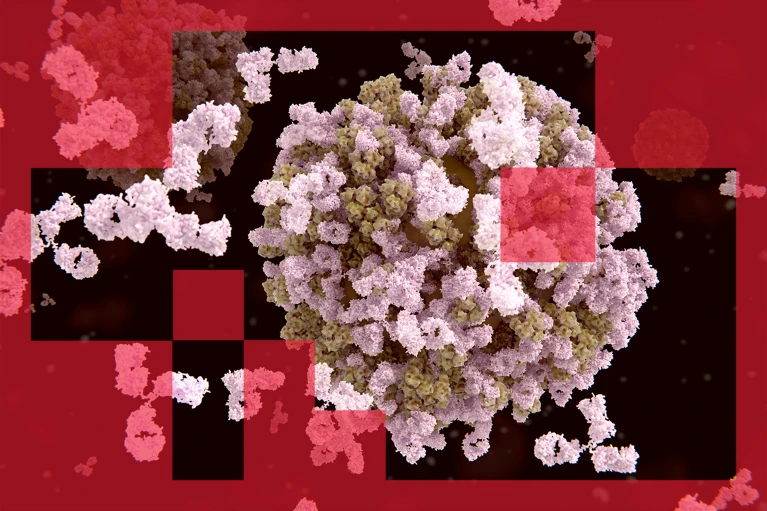
In the past year, the field of protein engineering reached an important turning point: researchers successfully used artificial intelligence to generate entirely novel antibody molecules. Although these first-generation designs fell short of the high potency and performance typical of commercial antibody therapies, they demonstrated that AI could, in principle, construct these complex biological structures from scratch.
Today, scientists say the gap between AI concepts and therapeutic reality is quickly narrowing. In recent months, multiple research teams have reported using both commercial AI tools and open-source models to create antibodies that look and behave much more like established antibody drugs.
Chang Liu, a synthetic biologist at the University of California, Irvine, says that these developments signal a broader shift within the field. According to him, the newest AI-based approaches “enable a democratization of antibody engineering” by allowing more groups to participate in advanced therapeutic design.
Timothy Jenkins, a protein engineer at the Technical University of Denmark, shares this optimism. He believes the progress being made in de novo antibody design will influence “how quickly and how many new therapeutics” reach early-stage testing in the coming years.
The Rise of Precision Nanobodies
Traditionally, therapeutic antibodies are identified by screening thousands or even millions of natural variations in the hopes of finding one that binds well to a specific biological target. But these screens do not always yield ideal results. Some antibodies latch onto their targets too weakly, while others bind to parts of the molecule that are not clinically useful.
Surge Biswas, CEO of Nabla Bio in Massachusetts, explains that scientists want more control: the ability to directly specify the exact location on a molecule an antibody should target—such as a disease-related enzyme site—and then allow AI to propose precise structures. “The promise of AI-guided design is that you can be atomically precise,” he says.
However, designing antibodies with AI has traditionally been difficult. Models like AlphaFold have struggled to predict the flexible loop regions of antibodies—regions that play a decisive role in target recognition.
Over the past year, new computational tools have emerged that make significant strides in modelling these flexible regions. According to Gabriele Corso, a machine learning researcher at MIT, updated versions of AlphaFold and other models have contributed to rapid improvements in AI antibody design.
In October, Corso and collaborators introduced a model called BoltzGen, demonstrating its ability to generate nanobodies—small, highly stable antibodies similar to those produced naturally by camels and sharks. These de novo designs targeted proteins linked to cancers, infectious diseases, and other conditions. After testing only a small number of designs, the team found many nanobodies that bound strongly to their intended targets, although the molecules have not yet been evaluated in disease models.
Other groups have reported comparable progress. Researchers from Stanford University and the Arc Institute also released an AI system capable of designing nanobodies with high accuracy. Meanwhile, the group led by Nobel laureate David Baker at the University of Washington published major improvements to their nanobody design tools using open-source technologies.
Breaking Ground with Full-Length Antibodies
Perhaps the most ambitious claims come from companies applying AI directly to therapeutic development. Recent announcements from Nabla Bio and Chai Discovery state that both organizations have successfully created “drug-like” antibodies with the help of proprietary AI platforms.
These efforts go beyond nanobodies. According to both companies, their tools can generate full-length antibodies—complex, multi-chain structures that form the backbone of many major antibody drugs. Baker’s team has also produced AI-designed full-length antibodies, reporting that some of these molecules can bind challenging targets such as G-protein coupled receptors (GPCRs). GPCRs are notoriously difficult to address using traditional antibody development methods.
Early laboratory data suggest that some AI-designed antibodies show binding strengths comparable to commercial therapeutics and possess key drug-development attributes, such as high production yields and strong selectivity for their intended targets.
Jenkins and other researchers caution that independent verification is still needed. The companies have not publicly released the sequences of their designs, making it hard to assess how their proprietary models compare with open-source platforms. Nonetheless, interest in open-source frameworks is growing, especially among start-ups that cannot afford to develop custom AI tools. Liu notes that these shared tools can help build a broader innovation ecosystem.
Toward Human Clinical Trials
One of the most pressing questions is how soon AI-designed antibodies will be tested in humans. Liu believes the newest tools are already capable of generating promising therapeutic leads, but limitations remain. For instance, AI models still struggle to accurately predict certain critical features, such as the precise binding strength of a proposed antibody. Because of these constraints, Liu estimates that the industry is still several years away from relying solely on AI for antibody creation.
Yet progress is accelerating. Generate Biomedicine in Massachusetts recently began a large clinical trial for a treatment targeting severe asthma. In this case, AI was used not to invent a new antibody from scratch, but to improve an existing one—optimizing factors including stability, binding affinity, and manufacturability.
Safety considerations remain important. One key unknown is whether the human immune system might view AI-designed antibodies as foreign, potentially causing harmful reactions. So far, the evidence suggests that AI-generated antibodies resemble naturally occurring ones, but formal safety studies are essential before any can be tested in patients.
Another challenge is determining which medical targets are best suited for AI-driven antibody design. Many researchers hope that AI can open the door to targets that have historically been too complex or inaccessible, including GPCRs and other difficult molecules.
Biswas adds that AI might eventually design antibodies with completely new capabilities, such as crossing the blood–brain barrier or recognizing several disease targets simultaneously. With computational tools now capable of generating designs almost instantly, he says scientists can devote more time to exploring these ambitious directions.
Leave a Reply