
Research driven by artificial intelligence advanced rapidly over the past year, and its influence on science is expected to deepen rather than fade. AI systems known as “agents,” which combine multiple large language models to handle complicated, multi-stage tasks, are likely to become far more common. Some of these systems may operate with minimal human supervision. As their capabilities grow, the next year could even mark the first time AI directly contributes to major scientific breakthroughs. At the same time, broader adoption will also reveal weaknesses. Researchers have already documented recurring problems, including AI agents making critical mistakes such as accidentally deleting important datasets.
At the same time, momentum is building around alternatives to large language models, which are costly to train and maintain. New methods emphasize compact AI systems designed to learn from smaller datasets and focus on narrow reasoning challenges. Rather than producing text, these models manipulate mathematical structures to solve logic-based problems. In one notable demonstration this year, a lightweight AI model outperformed far larger systems on a formal logic test, suggesting that efficiency and specialization may shape the next phase of AI research.
Gene-editing research is also poised to accelerate. In the coming year, scientists could launch two clinical trials aimed at developing personalized gene therapies for children with rare inherited diseases. These efforts build on the widely followed case of KJ Muldoon, an infant with a severe metabolic disorder who received a customized CRISPR-based treatment designed to correct his specific genetic mutation.
The team behind Muldoon’s treatment plans to seek approval from the US Food and Drug Administration to begin a clinical trial in Philadelphia. The study would test gene-editing therapies in children affected by rare metabolic disorders caused by variations in seven related genes, all of which can be targeted using a similar editing strategy. A separate research group hopes to start a parallel trial focused on inherited immune-system disorders, expanding the reach of precision gene therapy.
Large-scale clinical research will also be under the spotlight. A major UK trial evaluating a single blood test capable of detecting roughly 50 different cancers before symptoms appear is expected to release its findings next year. The test looks for fragments of DNA shed by tumors into the bloodstream and can identify the tissue or organ from which the cancer signal originates. With more than 140,000 participants enrolled, the trial is one of the largest of its kind. If the results are positive, UK health authorities plan to introduce the test across hospitals nationwide.
Regulation of clinical trials in the United Kingdom is also set for a significant shift. In April, the most substantial overhaul of trial regulations in two decades will take effect. Under the new framework, researchers will be able to apply for ethical and regulatory approval through a single process. The law will also require all medicine-related trials to be publicly registered before enrolling participants and to publish a summary of results within a year of completion. These changes aim to speed up research, improve transparency, increase participant diversity and shorten the path from discovery to treatment.
Across the Atlantic, proposed changes by the US Food and Drug Administration that would allow approval of new drugs based on a single clinical trial rather than two are expected to continue evolving into 2026.
Space exploration will remain busy as well, particularly around the Moon. NASA’s Artemis II mission is scheduled to send four astronauts on a ten-day journey around the Moon aboard the Orion spacecraft. This will be the first crewed lunar mission since the 1970s and a critical step toward future missions that aim to land astronauts on the lunar surface.
China is preparing to launch its Chang’e-7 mission in August as part of its ongoing lunar exploration program. The mission will deploy a hopper-style spacecraft equipped with shock-absorbing technology, targeting the Moon’s south pole. This region, filled with craters and rugged terrain, is notoriously difficult to land on but is scientifically valuable. Following India’s successful Chandrayaan-3 landing near the south pole in 2023, Chang’e-7 aims to search for water ice and investigate moonquakes if it lands successfully.
Mars is also drawing attention. Japan plans to launch its Martian Moons eXploration mission, which will visit Mars’s moons Phobos and Deimos. The spacecraft will collect samples from Phobos and return them to Earth in 2031, marking the first time material from a Martian moon has been brought back for study.
Meanwhile, the European Space Agency is preparing to launch PLATO, a planet-hunting satellite designed to search for Earth-like worlds. Equipped with 26 cameras, PLATO will observe more than 200,000 bright stars, looking for planets with temperatures suitable for liquid water. Its mission is expected to significantly expand the search for potentially habitable exoplanets.
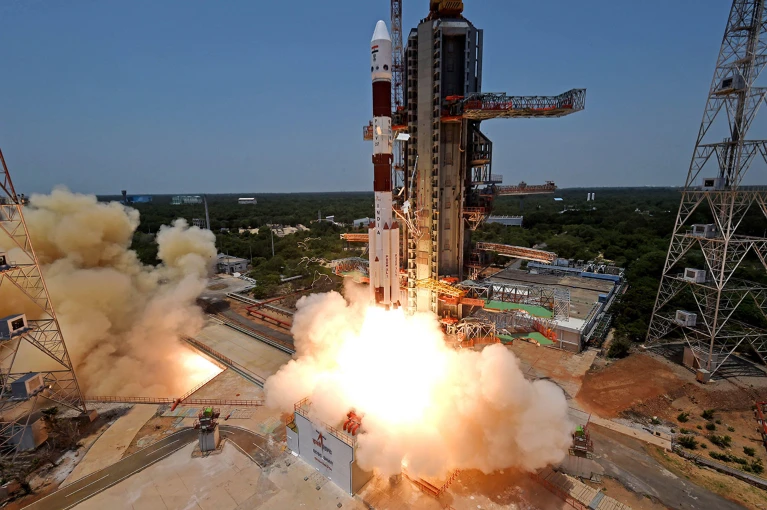
India’s first solar observatory, Aditya-L1, will continue its observations during the peak of the Sun’s 11-year activity cycle, known as solar maximum. Positioned about 1.5 million kilometers from Earth in a halo orbit, the spacecraft can continuously monitor solar activity, including sunspots, flares and solar storms. The data collected will help scientists better understand how the Sun behaves during its most active periods.
Earth science and physics will see major developments as well. China’s ocean-drilling vessel Meng Xiang is expected to begin its first scientific expedition next year. Designed to drill up to 11 kilometers through the ocean floor into Earth’s mantle, the ship will collect samples that could shed new light on how oceanic crust forms and what drives tectonic processes.
In particle physics, preparations are underway for a major upgrade to the Large Hadron Collider at CERN near Geneva. The collider is scheduled to stop operations for three years starting in 2026 to allow installation of the high-luminosity LHC, a far more powerful version of the machine that is expected to begin operating in 2030.
In the United States, Fermilab hopes to complete construction of the Mu2e detector in April. The experiment will test whether a muon, an unstable subatomic particle, can transform directly into an electron without producing additional particles. After construction, the team will spend time calibrating the system, with data collection planned to begin in 2027.
Politics will continue to shape the scientific landscape as well. The effects of US President Donald Trump’s return to office are expected to carry into 2026. His first year back has already brought sweeping policy shifts that are likely to continue influencing American science.
Ongoing disputes between the White House and Congress over reductions in science funding are expected to persist. Researchers have raised concerns about changes to public health policy, including scaled-back vaccine recommendations, support for unproven medical claims, reductions in international aid and less engagement in global health initiatives. Climate policy may also be weakened, with implications for environmental research.
US universities face additional pressure from immigration restrictions that could limit the flow of international students and researchers. Many institutions are also dealing with legal battles over canceled federal grants and job losses linked to policy changes.
At the same time, the Trump administration has sought to concentrate national research efforts on artificial intelligence and quantum technologies. While some scientists welcome the focus, others worry that prioritizing these areas could divert funding and attention from a broader range of scientific disciplines.
Leave a Reply