
The most widely discussed science-related issue of the year did not emerge from a laboratory, but from political turbulence in the United States. Reductions in research funding, layoffs across academic institutions, and policies shaped by vaccine skepticism were viewed by many scientists as a direct challenge to evidence-based decision-making under President Donald Trump’s administration. Critics warn that the consequences for scientific progress and public trust may extend well beyond the current political cycle.
Despite these challenges, 2025 also delivered a series of encouraging scientific developments that point toward a more hopeful future. For many researchers outside the United States, daily scientific work continued with relative stability. As Glen Peters, a climate policy researcher at the CICERO Center for International Climate Research in Oslo, noted, for non-US scientists it often felt like business as usual: continuing research, publishing findings, and collaborating internationally.
Across fields ranging from conservation biology to medicine and energy, the year produced breakthroughs that underscored the resilience of global science. From successful species recovery efforts to advances in gene editing and public health, 2025 offered tangible examples of how sustained research and international cooperation can yield meaningful progress.
One of the most visible successes came in wildlife conservation. Several species once considered at high risk of extinction showed strong signs of recovery. The green sea turtle, long listed as endangered since the 1980s, was reclassified as a species of least concern on the International Union for Conservation of Nature’s Red List. Decades of targeted action, including protecting nesting sites and reducing accidental capture in fishing nets, allowed populations to rebound across multiple regions.
In Australia, the ampurta, a small desert-dwelling marsupial roughly the size of a rat, made an even more dramatic comeback. Once on the brink of extinction, the species expanded its habitat by more than 48,000 square kilometers between 2015 and 2021. This expansion occurred despite prolonged droughts and limited food availability, highlighting the impact of sustained conservation management.
Marine protection also reached a landmark moment. In September, more than 60 countries approved the United Nations High Seas Treaty, a long-awaited agreement designed to protect biodiversity in international waters. Scheduled to take effect in January, the treaty aims to safeguard at least 30 percent of global land and ocean areas, marking a major step forward for ocean conservation.
Environmental progress extended into the upper atmosphere as well. Scientists reported that the Antarctic ozone hole had shrunk to its smallest size since 2019, reinforcing evidence that Earth’s protective ozone layer is slowly recovering. First identified in 1985, the ozone hole was caused largely by human-made chlorofluorocarbons used in refrigeration and aerosol products. The global response, led by the 1987 Montreal Protocol, successfully phased out these chemicals. As a result, the average size of the ozone hole has steadily declined, with full recovery projected for the late 2060s if current policies remain in place.
Medical science also recorded a series of breakthroughs, particularly in gene editing. Researchers described 2025 as a pivotal year for the field, with multiple clinical trials achieving results once considered out of reach. Gene therapy for Huntington’s disease showed remarkable promise, slowing cognitive decline in participants by roughly three-quarters. In another trial, patients with T-cell acute lymphoblastic leukemia experienced high remission rates using a new form of CAR-T therapy enhanced by base-editing technology.
For the first time, scientists also tested a CRISPR-based treatment custom-designed for a single individual, opening the door to personalized genetic medicine. Additional trials targeted rare immune disorders and inherited mutations linked to lung and liver disease. Together, these studies demonstrated how collaboration between academic researchers and industry partners can accelerate the development of treatments for rare and previously untreatable conditions.
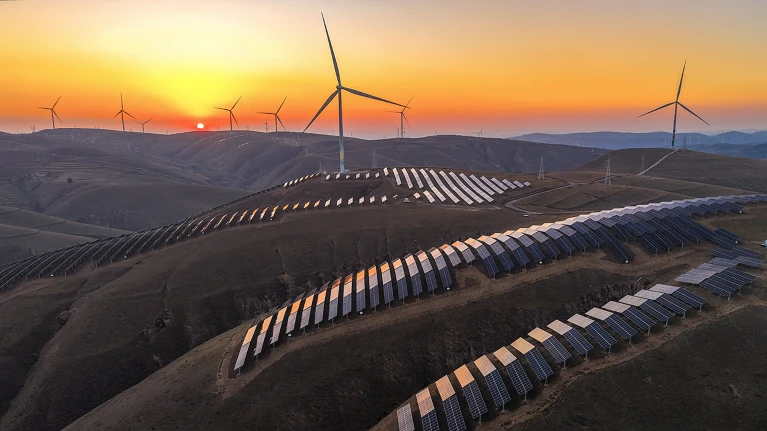
The global energy landscape continued to shift in 2025, driven by rapid expansion of renewable power. For the first time, renewable energy sources collectively surpassed coal as the world’s largest source of electricity. China played a central role in this transition, becoming the first nation to install one terawatt of solar power capacity. In just the first half of the year, the country added more than 250 gigawatts of new solar installations, exceeding the combined additions of the rest of the world.
Europe also made significant progress, with renewables supplying roughly half of the European Union’s electricity demand during the middle quarters of the year. Globally, renewable capacity is expected to grow by nearly 4,600 gigawatts between 2025 and 2030. Still, rising fossil fuel emissions remain a concern, raising questions about how quickly clean energy can fully replace traditional sources.
Public health saw notable victories as well. In September, an outbreak of Ebola in the Democratic Republic of the Congo was brought under control in just six weeks. Rapid coordination between local governments, international partners, and health workers proved critical. Vaccinations and monoclonal antibody treatments were deployed quickly, limiting severe illness and preventing wider spread. Improved community engagement and contact tracing played a key role in the successful response.
Progress against malaria offered further hope. The World Health Organization approved the first malaria treatment specifically designed for infants, a milestone given that children under five account for the majority of malaria deaths worldwide. In parallel, a new drug combination demonstrated high effectiveness in late-stage trials, including against parasites resistant to older treatments. If approved, it would represent the first new class of malaria medication in more than two decades.
Science-based policy decisions also delivered measurable benefits in allergy prevention. In the United States, peanut allergies among young children declined sharply over the past decade following updated health guidelines. Research showed that early exposure to peanut products significantly reduces the risk of developing allergies, overturning long-standing advice to delay introduction. As a result, peanut allergy rates among children under three fell by more than 40 percent, with similar declines seen in other food allergies.
Taken together, these developments illustrate that even in a year marked by political uncertainty and institutional strain, scientific progress continued across borders and disciplines. The achievements of 2025 serve as a reminder that sustained investment in research, evidence-based policy, and international cooperation can deliver lasting benefits for people and the planet alike.
Leave a Reply