
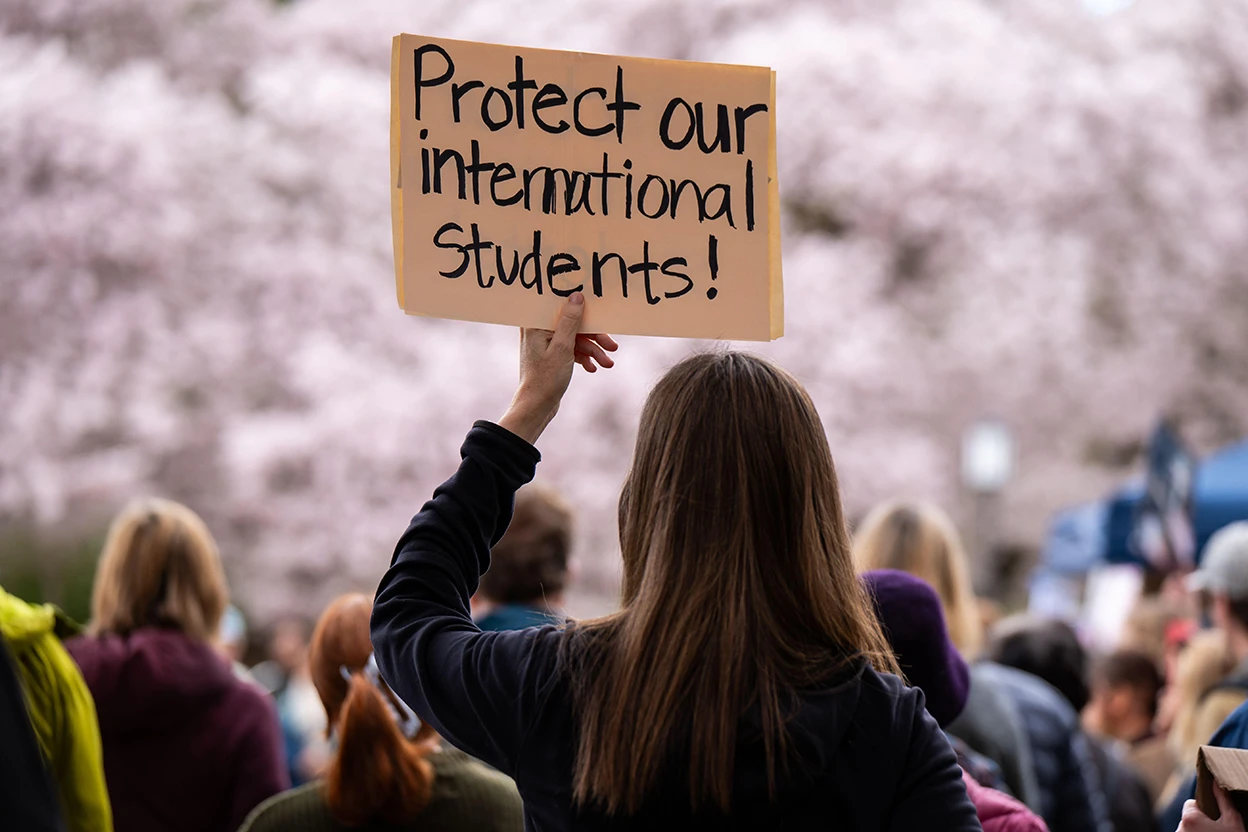
After Donald Trump secured victory in the November 2024 U.S. presidential election, the journal Nature invited six prominent biomedical scholars to outline what they hoped the new administration would prioritize in science and health policy. One year later, those same experts reflect on how the first year of Trump’s presidency has unfolded and what can still be done to safeguard higher education, biomedical research, public health, and global preparedness in the years ahead.
Their reflections reveal a shared concern: that political ideology, administrative disruption, and funding cuts have weakened key institutions at a time when scientific leadership is more critical than ever.
Reimagining the role of universities
Amander Clark
For faculty, students, and staff across U.S. universities, exhaustion has become a defining feature of the past year. A rapid series of executive actions has reshaped nearly every aspect of campus life, touching immigration rules, student visas, transgender rights, student-loan relief, admissions standards, free speech, and academic independence. Research agendas, classroom teaching, mentorship, and community outreach have all been affected.
In my own work, this environment has led to a troubling form of self-censorship. Topics related to reproduction and reproductive technologies, especially those relevant to sexual and gender minorities, now feel professionally risky to discuss openly. This narrowing of academic freedom undermines the very purpose of a university.
As someone who was the first in my family to attend college, I know firsthand how higher education can transform lives. Universities have long served as a bridge to economic mobility for students from low-income backgrounds. I had hoped the new administration would expand debt-free pathways to higher education. Instead, changes tied to executive orders and the One Big Beautiful Bill Act have reduced federal student aid and triggered layoffs at the Department of Education, making college even less accessible for those with the fewest resources.
Still, crisis can create space for renewal. Once the immediate damage is addressed, higher education has an opportunity to rethink its mission and reconnect with the public good. Research should be more accessible beyond academic elites, and universities should actively engage the public in shaping their priorities. Aligning academic programs with societal needs and future workforce demands will be essential.
In the short term, faculty members have turned to the courts to defend constitutional protections. In late 2025, a group of university professors and faculty associations filed a lawsuit in federal court in California to block actions they argued were unconstitutional. I was among dozens who submitted declarations describing harm, including restrictions on using inclusive language when teaching reproductive science. A preliminary injunction restored our ability to teach and research freely, at least for now.
Confronting disorder in health care governance
Hank Greely
As 2024 came to a close, I worried that patient welfare might be subordinated to ideology or institutional upheaval. Unfortunately, those concerns proved justified. In 2025, both the Food and Drug Administration and the Centers for Disease Control and Prevention saw deep staff losses, with roughly one-fifth of FDA employees and nearly one-third of CDC personnel leaving. Public-health data disappeared from government websites, making research and teaching increasingly difficult.
These disruptions were not driven primarily by corporate influence but by political chaos. The questioning of vaccine safety by the leadership of the Department of Health and Human Services, along with weakened childhood vaccination recommendations, has already had real consequences. Measles cases surged to more than 2,000 in 2025, the highest number in decades, with multiple deaths reported. While vaccine hesitancy began rising during the COVID-19 era, federal messaging has failed to reverse the trend.
The future of public health will depend heavily on who controls regulatory agencies and whether political leaders choose to rebuild them. Midterm election pressure, industry concerns about regulatory credibility, and public dissatisfaction could all play a role in restoring evidence-based policy.
States, professional associations, and health-care organizations are also critical actors. They can issue science-based guidance on vaccines and treatments and help counter misinformation, whether about childhood immunizations or medication safety during pregnancy. Silence is not an option. Remaining quiet only allows confusion and distrust to spread further.
Shifting health systems toward prevention
Eric Topol
More than a year ago, I argued that government-supported medical artificial intelligence could dramatically improve early diagnosis and disease prevention. That promise remains largely unrealized. Despite public rhetoric about improving national health, the U.S. health-care system continues to focus on treating disease rather than preventing it.
Advances in multimodal AI now make it possible to analyze vast layers of biomedical data, including medical records, genetic information, and biomarkers, to predict disease years in advance. In 2025, researchers demonstrated models capable of forecasting more than a thousand diseases up to two decades before onset. Blood-based biomarkers are also improving predictions for conditions such as Alzheimer’s disease.
Yet federal funding for the large, diverse data sets required for this work has been slashed. Programs designed to collect representative genomic and health data have been severely reduced, and government AI initiatives have largely ignored disease prevention.
As a result, researchers are increasingly turning to philanthropy. At Scripps Research, philanthropic support has allowed us to launch a prevention-focused Alzheimer’s trial that uses AI to identify high-risk individuals and guide them toward proven lifestyle interventions. Such trials are far cheaper than traditional drug studies and can be conducted quickly and at scale.
With an aging population, the economic and health benefits of prevention are obvious. Other countries, including the United Kingdom, are moving in this direction. If the United States fails to act, it risks falling behind nations that will soon reap the rewards of large-scale disease prevention.
Rebuilding global pandemic readiness
Salim S. Abdool Karim and Quarraisha Abdool Karim
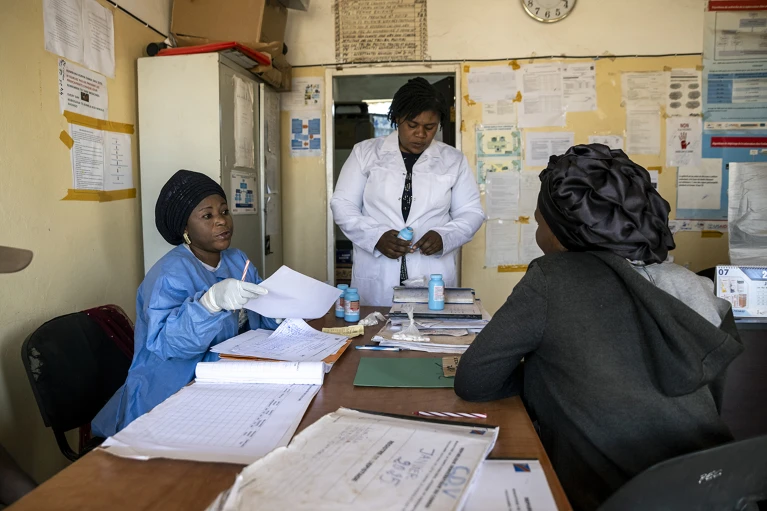
In January 2025, our research center in Durban, South Africa, received a sudden order from USAID to halt work on an HIV prevention trial for African women. The directive raised immediate ethical concerns. Participants were still using the investigational product, and abruptly stopping the trial would have endangered their well-being. We used our own funds to safely conclude the study.
This episode reflects a broader retreat by the United States from global health leadership. The administration has weakened pandemic preparedness structures, withdrawn from international cooperation through the World Health Organization, and reduced support for programs such as PEPFAR.
The rollback of pandemic preparedness is especially alarming. The U.S. did not participate in finalizing a global pandemic agreement and halted funding for research on mRNA vaccines, which played a crucial role in combating COVID-19 and are likely to be vital in future outbreaks.
Much of this damage could be reversed quickly. Restoring cooperation with the WHO, rejoining international preparedness agreements, and grounding public-health policy in scientific evidence would go a long way toward rebuilding trust and capacity. Meanwhile, research is urgently needed to assess how recent policy choices have weakened U.S. readiness for future pandemics.
As other countries accelerate local research, data sharing, and vaccine manufacturing, the United States risks becoming more vulnerable to the next global health crisis.
Charting a path to revive research
Ramanan Laxminarayan
I expected a pragmatic shift toward domestic priorities, but the scale of public-health funding cuts has been staggering. These decisions may ultimately be remembered as a serious, self-inflicted blow to national health.
At the same time, disruption creates an opening to rethink how systems function. The public-health community must offer concrete ideas for rebuilding research and training. Three steps stand out.
First, universities should reduce excessive administrative overhead, which often consumes more than half of each research dollar. Lowering these costs would stretch limited funding further.
Second, future investments must emphasize training grants, especially in biomedical and global health fields. Without clear career pathways, talented young researchers will turn elsewhere.
Third, scientists must communicate more openly and neutrally with the public. During COVID-19, some debates were treated as settled when international experience suggested alternative approaches. Engaging respectfully with diverse perspectives can strengthen public trust in science.
The challenges facing science and health policy are severe, but they are not insurmountable. With clarity, transparency, and renewed commitment to evidence-based decision-making, it is still possible to rebuild systems that protect both public health and scientific progress.
Leave a Reply