
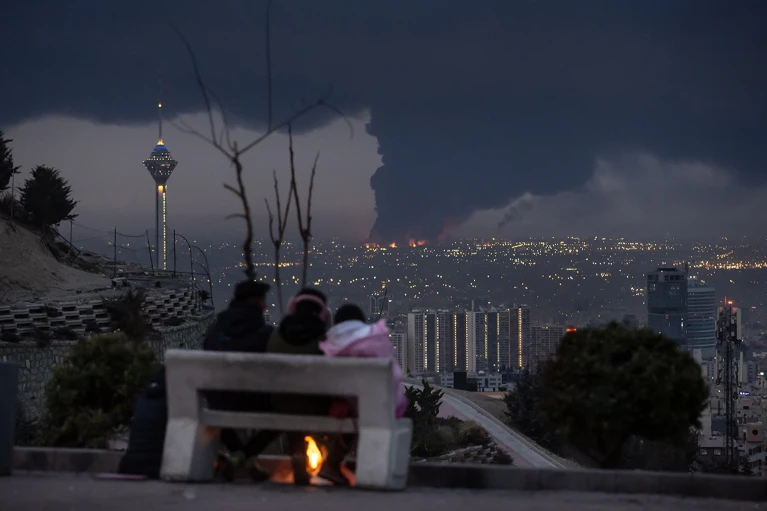
Thick, hazardous smoke and dark, acidic rain have engulfed Tehran, Iran’s capital, this week after missile strikes damaged oil depots and refineries. Experts warn that the rain likely carries chemicals harmful to both humans and the environment. But what exactly is “black rain,” how does it form, and how long will it remain a threat?
On February 28, Israel and the United States launched missile attacks against Iran. In retaliation, Iran targeted Israel and U.S. military bases, as well as embassies in several Middle Eastern countries, including Saudi Arabia, the United Arab Emirates, Iraq, Qatar, and Kuwait. Some media reports indicate that more than 1,700 people have died in Iran and neighboring regions as a result of the conflict.
Christian Lindmeier, a spokesperson for the World Health Organization (WHO), told reporters that the missile strikes on Iran’s oil facilities released toxic hydrocarbons, sulfur oxides, and nitrogen compounds into the atmosphere. The resulting mix of pollutants and rain poses a risk of chemical burns and respiratory damage. “It is a dangerous situation,” Lindmeier said, noting that Iranian authorities have urged residents to remain indoors.
Understanding Black Rain
“Black rain” is a term used for precipitation that carries pollutants from the atmosphere, explains Farzana Kastury, an environmental scientist at the University of Adelaide in Australia. This type of rain often occurs after bushfires or when heavy fuels—low-quality byproducts of crude oil refining—are burned. In Tehran, the black rain is likely contaminated with pollutants from burning heavy fuel, including hazardous chemicals such as benzene, acetone, toluene, and methylene chloride.
Gabriel da Silva, an atmospheric chemist at the University of Melbourne, notes that black rain reflects extremely high levels of air pollution. Video footage from Tehran shows the rain appearing black, a result of soot and carbon released from fires, according to Brian Oliver, a researcher in respiratory health and pollution at the University of Technology Sydney. Additionally, the rain may contain particles from damaged buildings, such as asbestos or silica.
The Role of Geography and Weather
Tehran is located near the Alborz mountain range, which often leads to a phenomenon called temperature inversion. In this situation, a layer of warmer air traps cooler air below, preventing polluted air from dispersing into the upper atmosphere. Da Silva points out that similar patterns are observed in cities like Los Angeles near the San Gabriel Mountains and Santiago, Chile, near the Andes.
Health Implications
Exposure to smoke from the fires can trigger breathing difficulties and may even increase the risk of heart attacks or strokes for people with pre-existing conditions, says Hui Chen, a clinician and neuroscientist at the University of Technology Sydney. Children are especially vulnerable to toxic fumes. The chemicals present in both smoke and rain can also irritate the eyes. The severity of health effects depends on the concentration of pollutants and duration of exposure.
High temperatures from the fires generate fine particulate matter, known as PM2.5, which measures less than 2.5 micrometres and can penetrate deep into the lungs. Kastury warns that inhaling PM2.5 may lead to cardiovascular disease, stroke, elevated blood pressure, and even cognitive decline. Pollutants in the rain, such as benzene or naphthalene, can also irritate the skin.
How Long Will the Pollution Last?
Pollutants usually dissipate in one of two ways: either they are diluted and carried away by wind over several days, assuming no new fires occur, or they are washed out by rainfall. However, da Silva notes that Tehran’s geography can hinder natural dispersion. While additional rain can remove pollutants from the air, it may contaminate soil and water sources.
Many chemicals can persist in the environment for extended periods, posing risks to aquatic life and humans alike. Kastury adds that people may continue to face exposure through drinking polluted water or consuming crops grown in contaminated soil.
Leave a Reply