

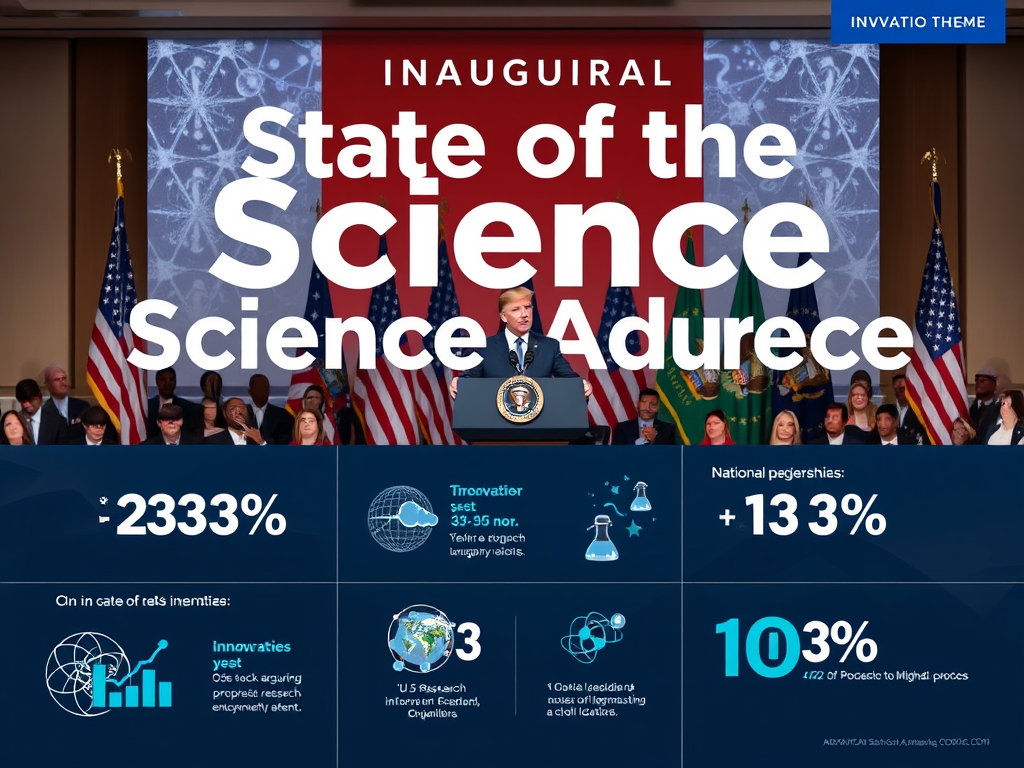
WASHINGTON — The National Academy of Sciences (NAS) is preparing to launch a groundbreaking event that could redefine the trajectory of U.S. research and innovation. On June 26 in Washington, D.C., NAS President Marcia McNutt will deliver the inaugural State of the Science address, highlighting how America’s scientific enterprise can adapt to growing global competition and rapidly shifting national priorities in the economy, defense, public health, and technological advancement.
For decades, the United States has stood as a beacon of scientific and technological progress. Breakthroughs in medicine, computing, space exploration, and clean energy have not only strengthened the nation’s economy but also shaped global standards in research and innovation. Yet, this leadership position is no longer guaranteed. In recent years, emerging powers have dramatically accelerated their investments in research and development, narrowing the gap that once defined American superiority in science.
As countries in Asia and Europe ramp up their government-backed innovation programs, the U.S. finds itself at a crossroads. Federal funding for scientific research — once the cornerstone of American innovation — has seen a gradual decline in real terms. Meanwhile, the private sector and philanthropic organizations are stepping in to fill the void, introducing new models of investment that are reshaping the direction and priorities of research across industries.
This evolving funding landscape presents both challenges and opportunities. On one hand, increased private investment brings flexibility, speed, and entrepreneurial vision. On the other, it risks concentrating research priorities in commercially profitable areas, potentially leaving behind critical public-interest fields like climate science, epidemiology, and fundamental physics. Balancing these forces will be central to the discussions at the State of the Science address, which aims to unite leaders from government, academia, industry, and philanthropy to envision a sustainable path forward for American science.
Dr. Marcia McNutt’s upcoming address is not merely a ceremonial speech—it represents a call to action. It will tackle key questions: How can the U.S. maintain global leadership in innovation amid intense international competition? What policies are needed to ensure that scientific progress continues to serve the public good? And how can the country foster collaboration between federal agencies, research institutions, and private enterprises to build a more resilient and equitable research ecosystem?
In recent years, scientific collaboration has become increasingly globalized. The pandemic underscored the value of international cooperation in vaccine development, data sharing, and crisis management. However, it also revealed vulnerabilities in supply chains, research infrastructure, and policy coordination. McNutt is expected to emphasize the importance of strengthening domestic research capacity while maintaining open, transparent partnerships with allies — ensuring that U.S. innovation continues to benefit from the best minds and technologies worldwide.
A core theme of the address will likely center on agility — the ability of the American science system to pivot rapidly in response to emerging threats and opportunities. From artificial intelligence and quantum computing to biotechnology and climate resilience, the next era of innovation will demand speed, cross-sector collaboration, and adaptable funding models. The NAS hopes to inspire policies that support a more flexible and responsive research ecosystem capable of meeting the challenges of the 21st century.
The State of the Science event will also serve as a platform for dialogue among policymakers, industry executives, and academic leaders. It seeks to bridge the gap between scientific discovery and real-world application, a challenge that has long limited the U.S.’s ability to translate research breakthroughs into large-scale societal benefits. Participants will explore strategies to strengthen the pipeline from university laboratories to industry and government initiatives, ensuring that scientific progress translates into tangible improvements in economic competitiveness, national security, and public health.
Another issue expected to be addressed is the workforce gap in science and technology. As industries evolve, the demand for skilled researchers, engineers, and data scientists continues to rise. However, uneven access to education and training has created disparities in who can participate in and benefit from scientific progress. McNutt’s address is anticipated to highlight the need for greater inclusion, diversity, and investment in STEM education to cultivate the next generation of innovators.
Moreover, the speech will likely touch on the growing role of artificial intelligence and automation in research. AI is transforming everything from data analysis to drug discovery, but it also raises new ethical and regulatory questions. The NAS aims to promote a forward-looking framework that ensures technological advancement aligns with ethical standards and public trust.
Beyond technological trends, the event will emphasize the broader societal context of science. In an era of misinformation and declining public confidence in institutions, rebuilding trust in science is crucial. Effective communication, transparency, and community engagement will be key to ensuring that scientific knowledge informs public decision-making and supports democratic governance.
The National Academy of Sciences, founded in 1863, has long served as a cornerstone of America’s scientific leadership, advising policymakers and advancing evidence-based solutions to the nation’s most pressing challenges. The launch of the State of the Science series reflects a renewed effort to assess the current landscape of research and innovation and to inspire a cohesive national strategy that aligns public and private interests for the greater good.
Ultimately, the message behind McNutt’s address is clear: maintaining the United States’ leadership in science requires more than past achievements—it demands foresight, collaboration, and sustained commitment. As global competition intensifies, America must reaffirm its role as a driver of discovery, a defender of truth, and a partner in global progress.
The State of the Science event promises to set the tone for a new era of American innovation — one defined not just by technological superiority, but by inclusiveness, adaptability, and a shared vision of progress that benefits all.
Leave a Reply