
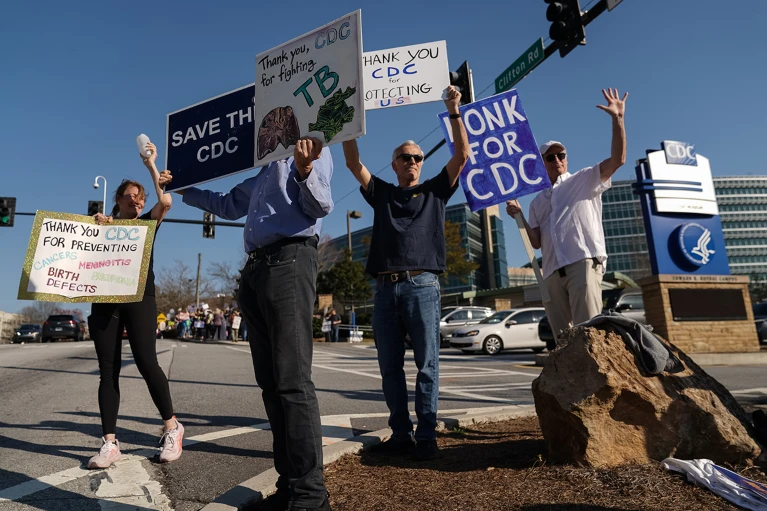
Nine months after anti-vaccine activist Robert F. Kennedy Jr. took office as the U.S. Secretary of Health and Human Services, the Centers for Disease Control and Prevention (CDC) has found itself at the center of an unprecedented transformation. Once a globally respected institution for its role in safeguarding public health, the CDC now faces widespread concern following major leadership changes and the dismissal of its Advisory Committee on Immunization Practices (ACIP)—a body long responsible for guiding national vaccine recommendations.
In June, all members of the ACIP were replaced by new advisers, many of whom are known for their skepticism toward vaccines. This shift has had immediate consequences: access to routine and critical vaccines—including those for COVID-19, influenza, measles, mumps, rubella, and chickenpox—has become increasingly uncertain. Public health experts warn that the ripple effects of these decisions could reverse decades of progress in controlling infectious diseases.
Among those who recognized the urgency of the situation early on was Dr. Michael Osterholm, an epidemiologist at the University of Minnesota and director of the Center for Infectious Disease Research and Policy (CIDRAP). Understanding the potential public health risks of policy disruptions at the CDC, Osterholm and his team decided to take action. In April, CIDRAP launched the Vaccine Integrity Project (VIP)—a new initiative dedicated to providing science-based evidence on vaccine safety, effectiveness, and policy.
The project’s first goal was to bring together experts from across the U.S. vaccine ecosystem to explore how non-governmental groups could help fill the growing gap in scientific review. Their conclusion was clear: CIDRAP should assume part of the analytical role previously carried out by the ACIP.
By July, as respiratory virus season approached, the VIP team had already begun an accelerated review of data on influenza, COVID-19, and respiratory syncytial virus (RSV) vaccines to offer evidence-based guidance to medical professionals. The team is now examining the hepatitis B vaccine, focusing on the crucial first dose given to newborns—a recommendation that has helped suppress the disease in the U.S. since the 1990s, but which the restructured ACIP has recently chosen to revisit.
Despite the apparent upheaval, a spokesperson for the U.S. Department of Health and Human Services maintains that “ACIP remains the nation’s scientific compass for immunization policy,” emphasizing that the government is not restricting vaccine access but rather “returning decision-making power to the American people.”
However, many in the public health community view these changes differently. With the ACIP largely inactive and the CDC undergoing significant layoffs, organizations like CIDRAP are stepping in to ensure that credible, data-driven recommendations remain available to the public.
To complement the VIP’s research efforts, CIDRAP also announced plans to publish health alerts modeled after the CDC’s Morbidity and Mortality Weekly Report (MMWR)—a vital bulletin historically used to communicate timely public health updates. According to Osterholm, recent reports suggest that the MMWR’s editorial independence has been compromised by political interference. To counter this, CIDRAP is partnering with NEJM Evidence to co-publish rapid reports that maintain scientific integrity and transparency.
The new platform aims to deliver information within days rather than weeks, ensuring quick dissemination of crucial health data. The initiative has drawn support from former CDC officials, including former CDC director Rochelle Walensky, who see CIDRAP’s work as essential to maintaining public trust in science-based communication.
Still, Osterholm firmly rejects the idea that CIDRAP is trying to replace the CDC. “No one could replace the CDC,” he emphasizes. “What we’re doing is simply filling a small but vital gap while the agency is under extraordinary pressure.”
He further explains that ACIP’s historical role went far beyond issuing recommendations—it involved extensive data analysis, epidemiological modeling, and long-term monitoring of vaccine safety and performance. CIDRAP’s VIP project, he says, is attempting to maintain just a fraction of that capacity, enough to ensure that healthcare providers and policymakers have reliable data to guide decisions in a time of uncertainty.
Osterholm acknowledges that public confidence in scientific institutions has been shaken. “We’re in an era when sound science is often questioned or dismissed,” he notes. “That makes it even more important to provide timely, transparent, and evidence-based information about vaccines.”
For now, CIDRAP’s efforts are seen as a temporary measure—one designed to keep the country’s immunization infrastructure informed and scientifically grounded until the CDC can fully reclaim its leadership role. “We look forward to the day when the CDC and ACIP are back to doing the vital expert review work that has protected millions of lives,” Osterholm says.
The rise of the Vaccine Integrity Project marks a pivotal moment in American public health. As government agencies face increasing political scrutiny and scientific institutions navigate an era of distrust, independent organizations like CIDRAP are stepping in to preserve the credibility of evidence-based medicine. Whether this effort will be enough to counteract the erosion of confidence in vaccines remains uncertain—but for many scientists, it represents a critical stand for truth in a time of deep division.
Leave a Reply