
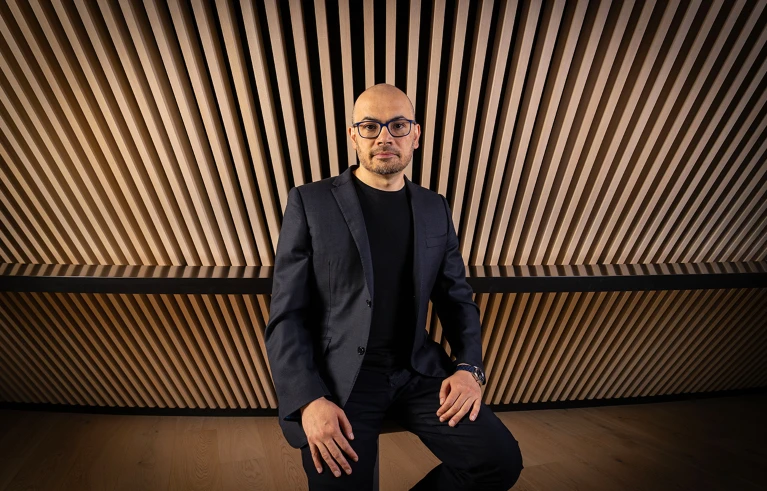
Demis Hassabis has never been known for modest ambitions. When he and his co-founders launched DeepMind in 2010, their goal was not simply to build another technology startup but to create an industrial-scale scientific research lab powered by artificial intelligence. Six years later, the world saw its first glimpse of that vision when DeepMind’s AI defeated the world’s top Go player—a moment that immediately elevated the company into global prominence.
But for Hassabis, winning one of the world’s most complex strategy games was only the beginning. In 2019, he reportedly told colleagues that he hoped DeepMind’s scientific tools would one day contribute to Nobel Prize–winning breakthroughs. By 2024, that once-audacious prediction came true. Hassabis and DeepMind researcher John Jumper earned a share of the Nobel Prize in Chemistry for the development of AlphaFold, an AI system that dramatically advanced the prediction of protein structures.
AlphaFold represents one of DeepMind’s hallmark accomplishments, but it is far from the only one. Since its founding, the company has pursued a science-first approach to AI development, pairing neuroscientific insights with machine-learning methods and applying rigorous scientific thinking to every project. Part of this approach involved building an internal ethics framework early on. In fact, the creation of an AI ethics board was reportedly a condition for Google’s acquisition of DeepMind in 2014 for roughly $400 million.
Today, as Google DeepMind, the lab is attempting to replicate AlphaFold’s transformative success across other scientific fields. “We’re applying AI to nearly every scientific discipline now,” Hassabis says. But that mission is unfolding in a very different technological and competitive landscape—one shaped by the explosive rise of large language models (LLMs) and the global race toward artificial general intelligence (AGI).
A Changing Landscape for AI and Science
The launch of ChatGPT in 2022 was, in Hassabis’ words, a “wake-up moment” for the industry. The sudden mainstream adoption of conversational AI triggered a flood of investment and intensified competition. Companies worldwide began accelerating development cycles to keep pace with rapidly evolving models and user expectations.
Google DeepMind is now part of that race. The company releases updates to its commercial Gemini LLMs at a near-constant pace while simultaneously conducting fundamental machine-learning research and building specialized models for scientific discovery. This dual mandate has increased internal pressure and made responsible development more complex. Some former employees say the company’s commercial turn has caused tension among staff who prefer a slower, more research-oriented culture.
Still, the central question remains: can Google DeepMind produce another breakthrough on the scale of AlphaFold?
From Arcade Games to Nobel-Winning Biology
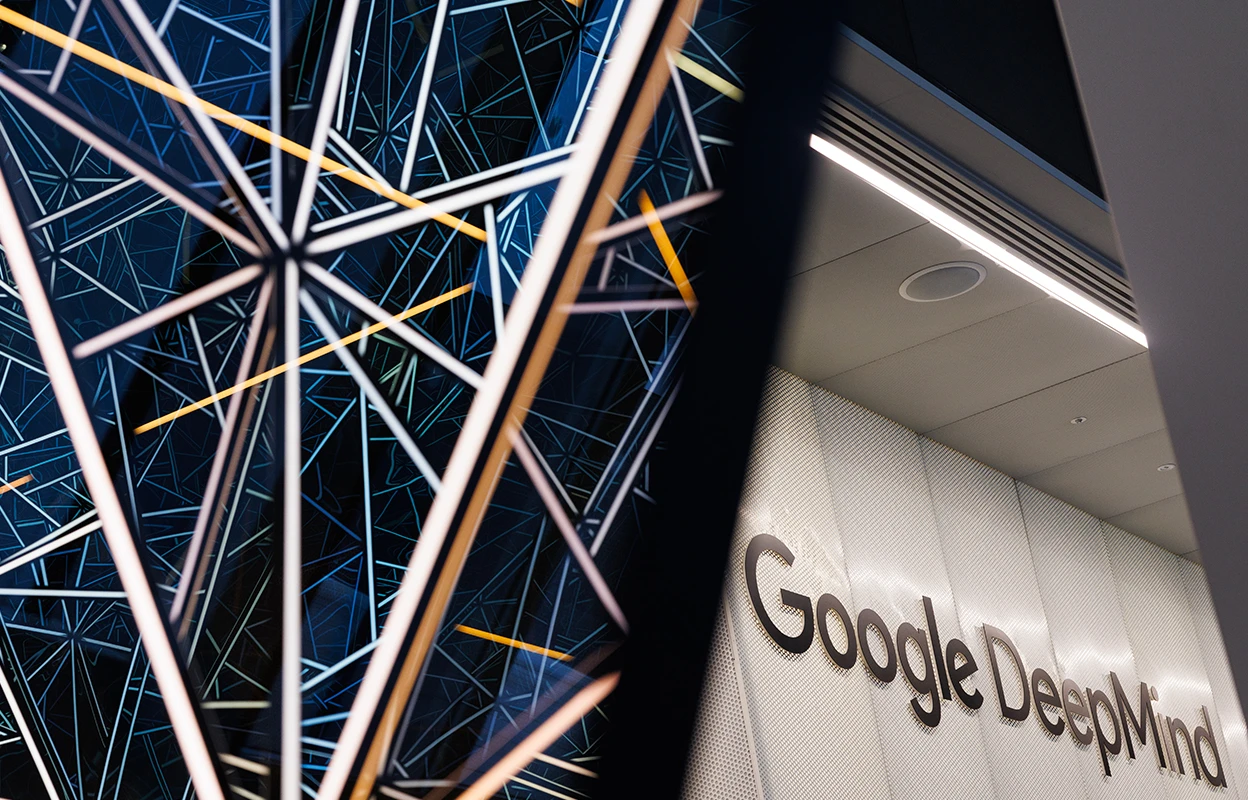
DeepMind’s headquarters in London’s King’s Cross district underscores how far the company has come. The sleek facility—complete with futuristic décor and espresso-fueled hallways—serves as a hub for hundreds of researchers working across disciplines. It stands in stark contrast to the company’s early days, when a small group of scientists set out to merge ideas from neuroscience with machine learning to build general-purpose AI systems.
Joanna Bryson, an AI ethics researcher at the Hertie School in Berlin, recalls the early team as exceptionally brilliant. “They were these 12 people everyone in the field wanted,” she says.
Through innovative uses of deep learning and reinforcement learning, DeepMind achieved several high-profile milestones, including teaching algorithms to play classic Atari games and ultimately creating the Go-playing system that captivated global audiences. Once those accomplishments were secured, DeepMind pivoted toward scientific challenges—beginning with the longstanding problem of protein-structure prediction.
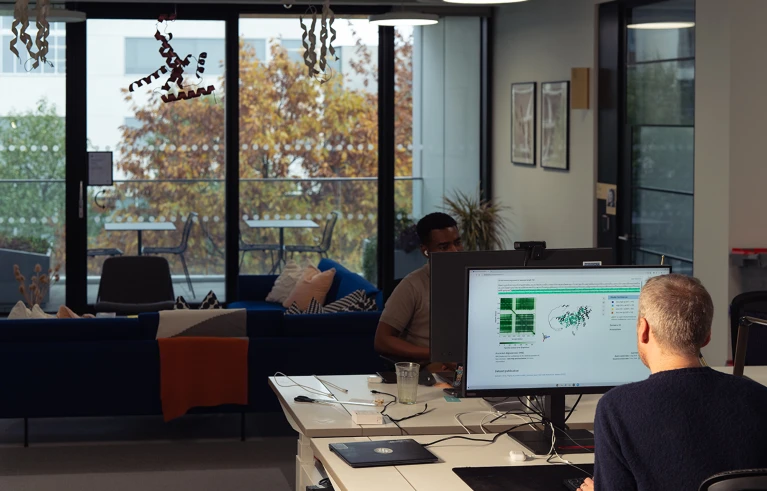
Hassabis had been fascinated by protein folding since his undergraduate days at the University of Cambridge. The problem was appealing not only because it was scientifically important but because it met key criteria for AI: abundant data and objective measures of success. The existence of a global competition evaluating structure-prediction algorithms provided exactly the feedback needed for iterative AI development.
Protein folding also fit Hassabis’ definition of a “root node” challenge—one where success enables countless downstream scientific advances. Such problems, he has said, are worth dedicating years of research and tremendous computational resources.
By 2018, DeepMind released the first version of AlphaFold. Two years later, it surpassed every competing system by a wide margin. Today, a DeepMind spin-off called Isomorphic Labs is using AlphaFold to accelerate drug discovery. The public AlphaFold database, which contains more than 200 million predicted protein structures, has already supported research into bee immunity, parasitic diseases, and many other areas.
New Frontiers: Genomes, Weather, and Materials
DeepMind is now targeting other foundational scientific challenges. According to Pushmeet Kohli, who leads scientific research at the company, the team focuses on problems where AI has the potential for transformative impact. These projects include nuclear fusion, climate modeling, and next-generation materials.
One promising initiative is AlphaGenome, launched in 2024 to explore the functions of long, non-coding regions of the human genome. Unlike protein folding, where each amino-acid sequence corresponds to a specific 3D structure, genomic sequences can serve multiple biological roles, making the prediction task far more complex.
Materials science is another area where the company hopes AI can drive a revolution. Traditional modeling struggles to capture the quantum-level interactions between electrons and atomic nuclei. DeepMind’s GNoME model made headlines in 2023 by predicting hundreds of thousands of potential new materials. Now, researchers are using machine learning to simulate electron behavior more accurately, aiming to design materials with tailored properties—such as superconductivity or novel magnetic features—directly from data.
Kohli envisions a future where AI can discover materials “with any property you want, as long as physics allows it.”
Balancing Innovation With Responsibility
Advanced AI systems inevitably raise safety concerns, from potential misuse in biology to built-in cultural biases. Google DeepMind maintains a responsibility and safety committee that reviews research proposals and analyzes potential risks throughout the development pipeline. The company also consults outside experts to stress-test models and evaluate broader impacts.
But operating responsibly has grown more difficult as the pace of development accelerates. The increased competition—especially after the merger with Google Brain in 2023—pushed the company into a more engineering-driven mindset. Some staff have expressed discomfort with this shift, particularly after a revision to Google’s AI principles removed language prohibiting work related to surveillance or defense.
Reports have also emerged of DeepMind employees in the UK exploring unionization in response to concerns over transparency and military involvement.
A company spokesperson maintains that Google DeepMind’s commitment to responsible AI remains unchanged and that updates to policies are part of maintaining flexibility while protecting research quality.
The Road to AGI
Like many leading AI organizations, Google DeepMind is working toward artificial general intelligence—systems capable of excelling at any intellectual task. Companies focusing primarily on LLMs often argue that scaling these models will eventually produce AGI. Hassabis is not convinced. He believes new conceptual breakthroughs will be necessary, not just larger datasets and more computing power.
Some researchers, including NYU’s Gary Marcus, believe DeepMind’s broad scientific approach gives it an advantage in the race toward AGI. Its interdisciplinary culture, long-term research focus, and willingness to explore unconventional ideas may provide the diversity needed to unlock the next paradigm in AI.
Wendy Hall, a computer scientist at the University of Southampton, adds that Hassabis brings a rare level of self-awareness to AGI development, taking seriously the implications such technology could have for humanity.
Despite commercial pressures, Hassabis says he still sees DeepMind as a scientific organization at heart—one that must model responsibility as it pushes the boundaries of what AI can achieve. Whether this balance can be maintained in a rapidly evolving industry remains an open question.
As Bryson puts it, “They’ve never been in it just for the money. But whether that will be enough—I don’t know.”
Leave a Reply