
As artificial intelligence advances at a pace faster than most governments can manage, concerns continue to grow—from widening social inequality to fears of catastrophic misuse. Yet despite these profound risks, the world has not reached a consensus on how AI should be governed. Countries have begun crafting their own national or regional rules, but for many governments, clear and enforceable regulations remain a work in progress.
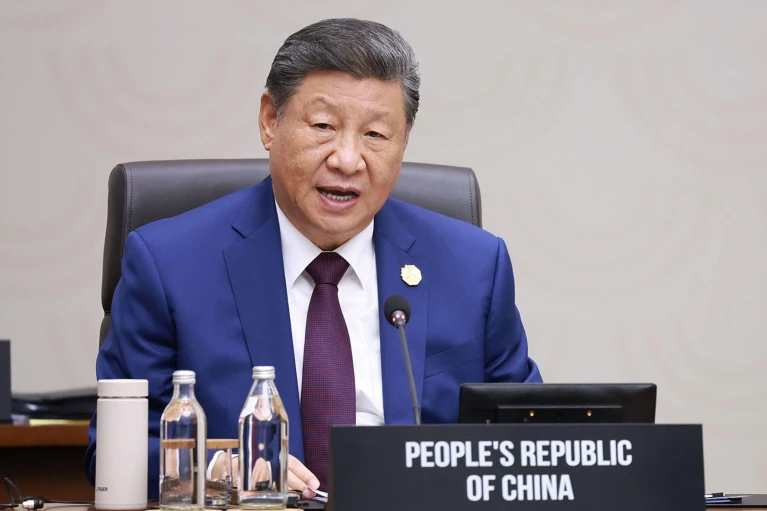
At an October meeting of the Asia-Pacific Economic Cooperation forum, Chinese President Xi Jinping renewed China’s call to establish the World Artificial Intelligence Cooperation Organization (WAICO), a proposed international body aimed at coordinating global governance efforts for AI. Beijing presents this initiative as a step toward a worldwide regulatory system, one in which nations collaborate rather than compete on fundamental AI standards.
China’s proposal highlights a broader ambition: to take a leading role in shaping how AI is managed internationally, a direction that stands in contrast to the United States’ more deregulatory posture. “China is the good guy at the moment when it comes to transparency and AI policy,” said Wendy Hall, a computer scientist at the University of Southampton, during an event in London earlier this year.
Although the creation of a global, legally binding treaty on AI faces steep political and practical obstacles, experts argue that it is possible. They draw comparisons to other high-risk technologies—such as nuclear energy or aviation—where international agreements have successfully established safety and oversight norms. This article explores China’s emerging approach to AI governance, its vision for WAICO, and whether global regulation stands a chance.
China’s Distinct AI Ecosystem
China’s AI landscape differs significantly from those in the United States and Europe. With strong government encouragement, major Chinese firms often release open-weight AI models, allowing developers worldwide to download and build upon them. Unlike Western labs racing toward human-level artificial general intelligence, China’s strategy focuses more heavily on using AI to accelerate economic development.
A recent example is the AI+ initiative introduced in August, which aims to integrate AI across industries to enhance productivity and innovation, explains Kwan Yee Ng, who leads international AI governance at Concordia AI, a Beijing-based consultancy.
How China Regulates AI
China was among the earliest nations to implement AI-specific regulations, beginning in 2022. Its rules cover a wide range of issues, including harmful content, data protection, and public-facing AI services. According to Ng, developers must allow Chinese regulators to test public AI systems before release. This has resulted in highly regulated models—including Hangzhou-based DeepSeek’s widely discussed R1 model, which became globally known earlier this year.
Despite strict rules on paper, enforcement is often flexible, says Angela Zhang, a legal scholar specializing in AI governance at the University of Southern California. This contrasts sharply with the United States, where no comprehensive federal AI legislation exists. In January, President Donald Trump revoked an executive order focused on AI safety and signaled support for preventing individual states from establishing their own AI regulations. Meanwhile, the European Union has created a tiered risk-based framework that imposes obligations on the most powerful AI systems. The United Kingdom, for its part, has postponed plans for broad AI legislation until at least next year.
The Current State of Global AI Law
International AI law remains scarce. The only binding multinational framework so far is the Council of Europe’s 2024 Framework Convention on AI, which requires participating countries to align AI use with human rights principles. However, the treaty has no enforcement mechanism, says Lucia Velasco of the Oxford Martin School’s AI Governance Initiative.
In addition to this treaty, several non-binding agreements exist—such as UNESCO’s ethical guidelines for AI, the OECD AI Principles, and the Bletchley Declaration signed at the UK’s 2023 AI Safety Summit. The United Nations has launched a global dialogue and formed a scientific advisory panel, but concrete global rules remain distant.
China’s Proposal for WAICO
China envisions WAICO as a platform where countries can coordinate AI governance while respecting national differences and elevating the voices of the global south. Beijing has proposed establishing the organization’s headquarters in Shanghai, though many structural details remain unsettled.
WAICO would not directly regulate AI in an enforceable way. Instead, it could function as a forum that gradually shapes consensus and harmonizes policies. The Chinese government has repeatedly emphasized this proposal in recent months, signaling its strategic importance.
One motivation is commercial, says Zhang: setting standards can help Chinese AI products spread more widely across international markets. Another is diplomatic. China aims to position itself as a leader among developing nations, promoting the idea that global south countries should help define AI rules rather than simply adopt those created elsewhere.
Imagining a Global AI Governance System
What a global regulatory structure for AI might look like remains uncertain. Some experts draw parallels to nuclear governance and the role of the International Atomic Energy Agency, which sets non-binding standards backed by binding treaties like the Convention on Nuclear Safety.
Others propose ideas such as:
- Third-party inspections of AI development labs
- A CERN-like international research center for frontier AI
- A technical standards body modeled after the UN’s International Civil Aviation Organization
But, as Velasco notes, AI does not neatly fit these historical templates. It is a rapidly evolving general-purpose technology primarily driven by private companies, not governments.
The UN could serve as the foundation for future global regulation, but initiating such a process would require a willing member state to bring it to the General Assembly.
Will Countries Agree on AI Governance Anytime Soon?
Political tensions—particularly competition between the United States and China—may significantly delay any robust global agreement, says Grace Gonzales of ControlAI. Since the signing of the Bletchley Declaration, follow-up events in Seoul and Paris have shown declining momentum toward coordinated AI safety efforts.
Furthermore, the UN faces limitations, including slow bureaucratic processes and limited funding, notes Brian Tse, founder of Concordia AI.
However, progress is still possible even without a binding treaty. If WAICO helps nations share risk assessments, clarify boundaries around high-risk AI systems, or coordinate safety expectations, it could play an important role.
Tse draws a comparison to the 1994 Convention on Nuclear Safety, which strengthened global reactor safety only after the Chernobyl disaster. With AI, he argues, humanity must try to take action before a crisis forces the world’s hand.
“We need to stay ahead of the curve,” he says, “and reduce the likelihood of a serious AI-related incident before it happens.”
Leave a Reply