
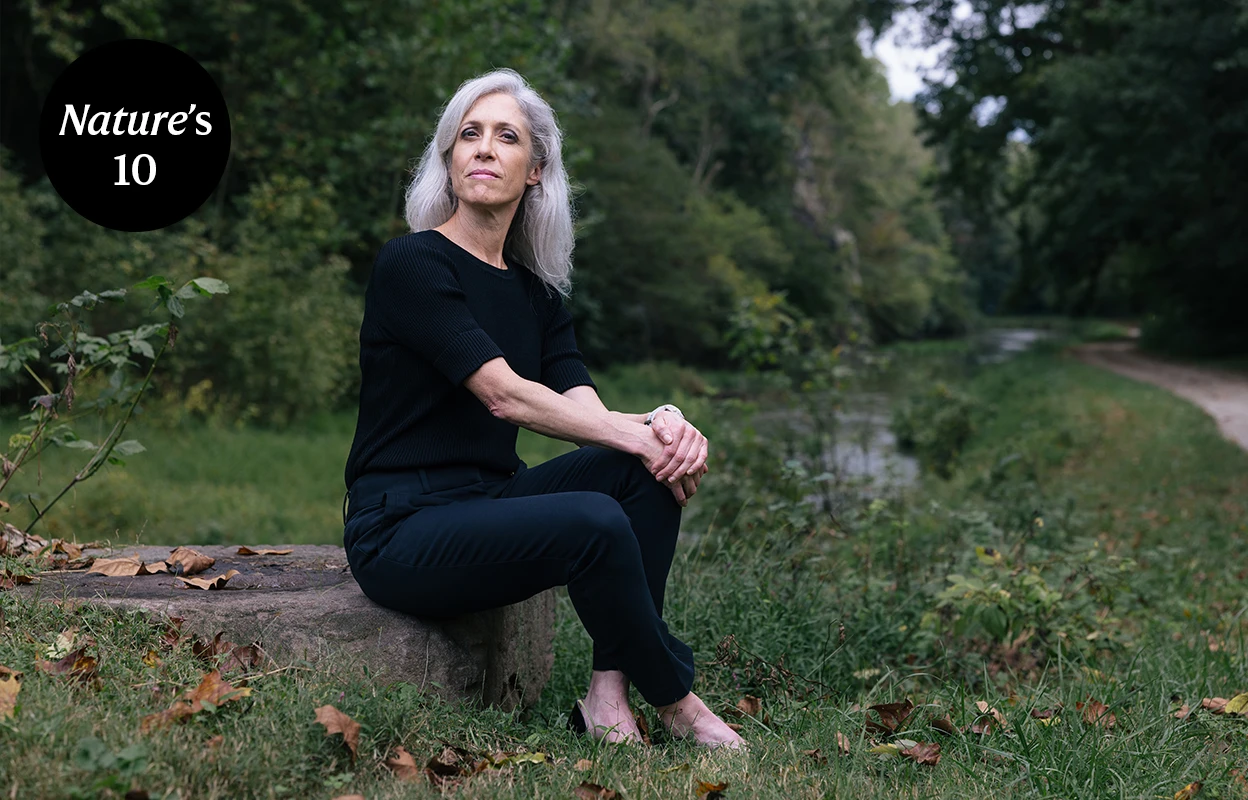
When Susan Monarez stepped into her new role as director of the US Centers for Disease Control and Prevention (CDC), many scientists across the nation felt a moment of relief. After years of turbulence in federal health leadership, her appointment appeared to signal a return to stability.
Monarez, a career microbiologist and immunologist, had served nearly two decades as a non-partisan public scientist. Her background and reputation made her an unexpectedly uncontroversial pick by President Donald Trump, whose earlier nominee—former Republican congressman and well-known vaccine skeptic Dave Weldon—had stirred intense concern before his name was withdrawn.
Yet the optimism surrounding Monarez’s appointment was short-lived. Less than a month after taking office, she was abruptly removed. At a contentious congressional hearing in September, Monarez testified that she was dismissed because she resisted directives that violated core scientific principles. She stated that US health secretary Robert F. Kennedy Jr pressured her to fire senior experts at the CDC and to approve vaccine recommendations before scientific evidence had been reviewed. According to Monarez, she refused—leading to her termination.
Kennedy strongly denies this version of events. In his own testimony, he claimed that Monarez admitted she could not be trusted, leaving him no choice but to remove her.
Kennedy has repeatedly expressed deep distrust of the CDC, often characterizing it as one of the most compromised agencies in the federal system. With a long history of anti-vaccine advocacy, he has already attempted to dismiss roughly a quarter of the CDC workforce and has replaced every member of a central federal vaccine advisory committee, adding several individuals who have publicly criticized immunization programs.
Monarez’s case has become one of the most visible examples of government scientists raising alarms about policy shifts within the Trump administration that they say endanger public health. Her dismissal is part of a pattern of actions that have disrupted the broader scientific ecosystem in the United States. Over the past year alone, thousands of federal research grants have been cancelled, hundreds of scientists have been fired, funding to universities has been blocked, and sweeping budget cuts to scientific research have been proposed. While administration officials argue these actions are intended to restore public confidence and improve innovation, many in the scientific community view them as deeply damaging.
Jennifer Nuzzo, director of the Pandemic Center at Brown University, describes Monarez as someone driven by evidence rather than politics. “She has always put the country first,” Nuzzo says. “No scientist with integrity would approve recommendations without reviewing the supporting data. Susan acted exactly as a responsible scientist should.”
Monarez’s departure set off a wave of resignations inside the CDC. Debra Houry, the agency’s top medical officer, along with three other senior officials, stepped down in protest. Their disagreements with Kennedy became public when Monarez, Houry, and the health secretary each presented their accounts at Senate hearings in September. Houry testified that key decisions—including one in May to restrict access to COVID-19 vaccines for children and pregnant individuals—were made without meaningful consultation with CDC experts.
The Department of Health and Human Services, led by Kennedy and responsible for overseeing the CDC, rejects Houry’s account.
Despite the turmoil, Monarez says she entered the position with an ambitious vision. Drawing on her extensive experience in biosecurity, artificial intelligence, and scientific data systems, she hoped to modernize the CDC by improving how it collects and analyzes information. Her goal was to enable the agency to deliver targeted, locality-specific public health guidance. “In science, you constantly challenge the status quo,” Monarez told Nature in an interview. “You look for ways to improve, but you never sacrifice ethical or scientific integrity simply because it’s convenient.”
Now the agency faces profound uncertainty about its future leadership. Jim O’Neill, a biotechnology investor serving as Kennedy’s deputy health secretary, has stepped in as acting director. Even before Monarez’s removal, it was difficult to find a long-term CDC leader. After her abrupt firing, experts say the challenge has only grown.
The next director will assume responsibility for an agency shaken by internal instability and national tragedy. In addition to widespread layoffs, the CDC workforce has been traumatized by a shooting at its headquarters in Atlanta, Georgia. The incident, fueled by the shooter’s hostility toward COVID-19 vaccines, left a police officer and the assailant dead. More than 150 windows were shattered across the campus, deepening the sense of crisis and vulnerability among staff.
Despite everything, Monarez says she holds no resentment. Instead, she insists she hopes the next leader succeeds. She acknowledges that heading the CDC is inherently political but believes it does not have to become compromised. “This agency is far too important,” she said in October. “We cannot afford to abandon it.”
As the CDC navigates one of the most turbulent periods in its history, the debate over scientific independence, political influence, and the future of public health in the United States continues to intensify. What remains clear, however, is that the challenges facing the agency—and the people responsible for guiding it—are far from over.
Leave a Reply