
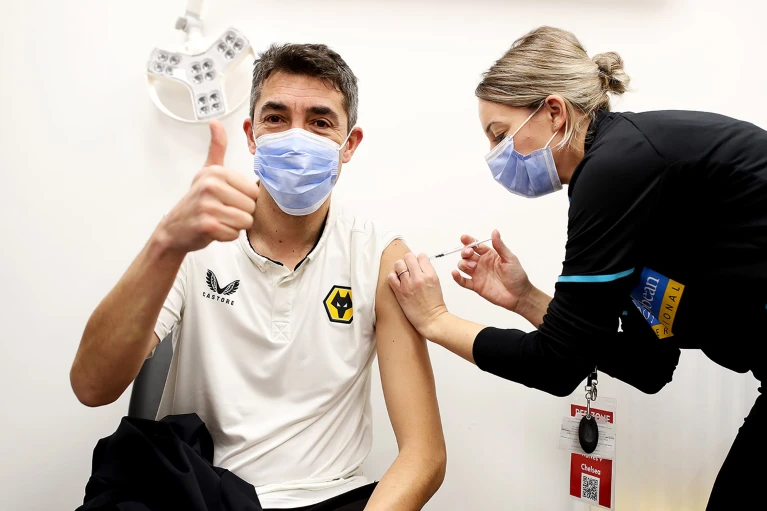
During the COVID-19 pandemic, vaccine hesitancy attracted widespread attention. While a portion of the population initially expressed doubts or concerns about getting vaccinated, a large share of those individuals eventually chose to receive at least one dose. This conclusion comes from a large-scale study conducted in the United Kingdom, which analyzed data from more than one million people and offers insight into how attitudes toward vaccination can evolve over time.
The research drew on data from the REACT study, a nationwide project that monitored the spread of SARS-CoV-2 across England and gathered detailed information on participants’ demographic backgrounds, health status, and behavioral patterns during the first two years of the pandemic. Once questions about vaccination status and attitudes were added in January 2021, researchers were able to link survey responses to official vaccination records held by the National Health Service. In total, the analysis covered 1.1 million individuals surveyed between January 2021 and March 2022.
Across this period, nearly 38,000 participants reported some degree of vaccine hesitancy, representing about 3.3 percent of the sample. Hesitancy was not constant throughout the study. It reached a high point of roughly 8 percent in early 2021, declined steadily to around 1.1 percent at the beginning of 2022, and then rose slightly to about 2.2 percent later on. Importantly, the data showed that hesitancy did not necessarily translate into long-term refusal. Around 65 percent of those who initially said they were hesitant ultimately went on to receive one or more COVID-19 vaccinations.
The study was led by Marc Chadeau-Hyam, a computational epidemiologist at Imperial College London, and was published in The Lancet. According to Chadeau-Hyam, the reasons behind vaccine hesitancy could be broadly categorized into eight main groups. These included worries about vaccine effectiveness, concerns over possible side effects, logistical barriers such as difficulty traveling to vaccination sites, mistrust of pharmaceutical companies, and individual health-related considerations.
By identifying these distinct patterns, the researchers believe public health authorities can design more targeted strategies to encourage vaccination. Chadeau-Hyam noted that if the right concerns are addressed among the right groups, uptake could improve more quickly in future vaccination campaigns.
When the researchers looked more closely at specific reasons for hesitancy, they found that concerns about effectiveness and personal health were the most common. Interestingly, individuals who cited these reasons were also among the most likely to eventually get vaccinated. This suggests that doubts rooted in uncertainty or lack of information may be easier to resolve through clear communication and evidence.
In contrast, deeper issues such as distrust in medicine or vaccine developers proved harder to overcome. Chadeau-Hyam described these as more persistent barriers, as they are often shaped by long-standing beliefs rather than immediate concerns about a specific vaccine.
The study also highlighted social and economic factors associated with hesitancy and non-vaccination. People living in economically disadvantaged areas, those who were unemployed, and individuals with lower levels of formal education were more likely both to express hesitancy and to remain unvaccinated. Gender differences were also observed. Women were more likely than men to report hesitancy, yet they were less likely to stay unvaccinated after doing so. One possible explanation is that some reasons commonly cited by women, such as pregnancy or breastfeeding, are temporary, and vaccination may occur once those circumstances change.
Chadeau-Hyam hopes these findings will inform future vaccine rollouts by helping health officials focus on people whose concerns can realistically be addressed with accurate and accessible information. From his perspective, understanding the nature of hesitation is just as important as measuring how widespread it is.
Not all experts, however, are convinced that the study’s conclusions can be easily applied beyond the unique circumstances of the COVID-19 pandemic. Noni MacDonald, a pediatric infectious disease specialist at Dalhousie University in Canada, praised the quality of the research and the scale of the dataset, but questioned its broader relevance. She pointed out that the pandemic created an unusual environment marked by fear of infection and strong social pressure to get vaccinated, conditions that may not exist to the same degree today.
MacDonald also noted that the hesitancy rates observed in the study were extremely low compared with current levels seen for many vaccines. In her view, a hesitancy rate of just over 3 percent would be considered remarkably positive in today’s climate. She suggested that the low figures were likely influenced not only by concern about COVID-19 itself, but also by the composition of the study population. Individuals who strongly opposed vaccines may have been less inclined to participate in the REACT study at all, and hesitant participants were reportedly less likely to agree to have their survey data linked with NHS records.
Looking beyond COVID-19, more recent evidence indicates that vaccine hesitancy for other diseases has increased, driven in part by the rapid spread of misinformation and disinformation. MacDonald emphasized that misleading claims, including some promoted by high-profile public figures, have contributed to declining vaccination rates for illnesses such as influenza and measles. Unlike COVID-19 vaccines, these immunizations have been used for decades, so uncertainty about safety or effectiveness is less central than it was for a newly developed vaccine.
Despite these challenges, Chadeau-Hyam believes the study still offers valuable lessons. While the research focused on COVID-19, he argues that the underlying principles apply more broadly, especially when new vaccines are introduced. Clear, transparent, and reproducible information played a crucial role in encouraging acceptance during the pandemic, and he sees this as a fundamental driver of public trust.
From his perspective, when people are given reliable data that they can understand and verify, many are willing to reconsider their initial doubts. In that sense, the study suggests that while vaccine hesitancy is complex, it is not fixed, and thoughtful communication remains one of the most powerful tools in public health.
Leave a Reply