
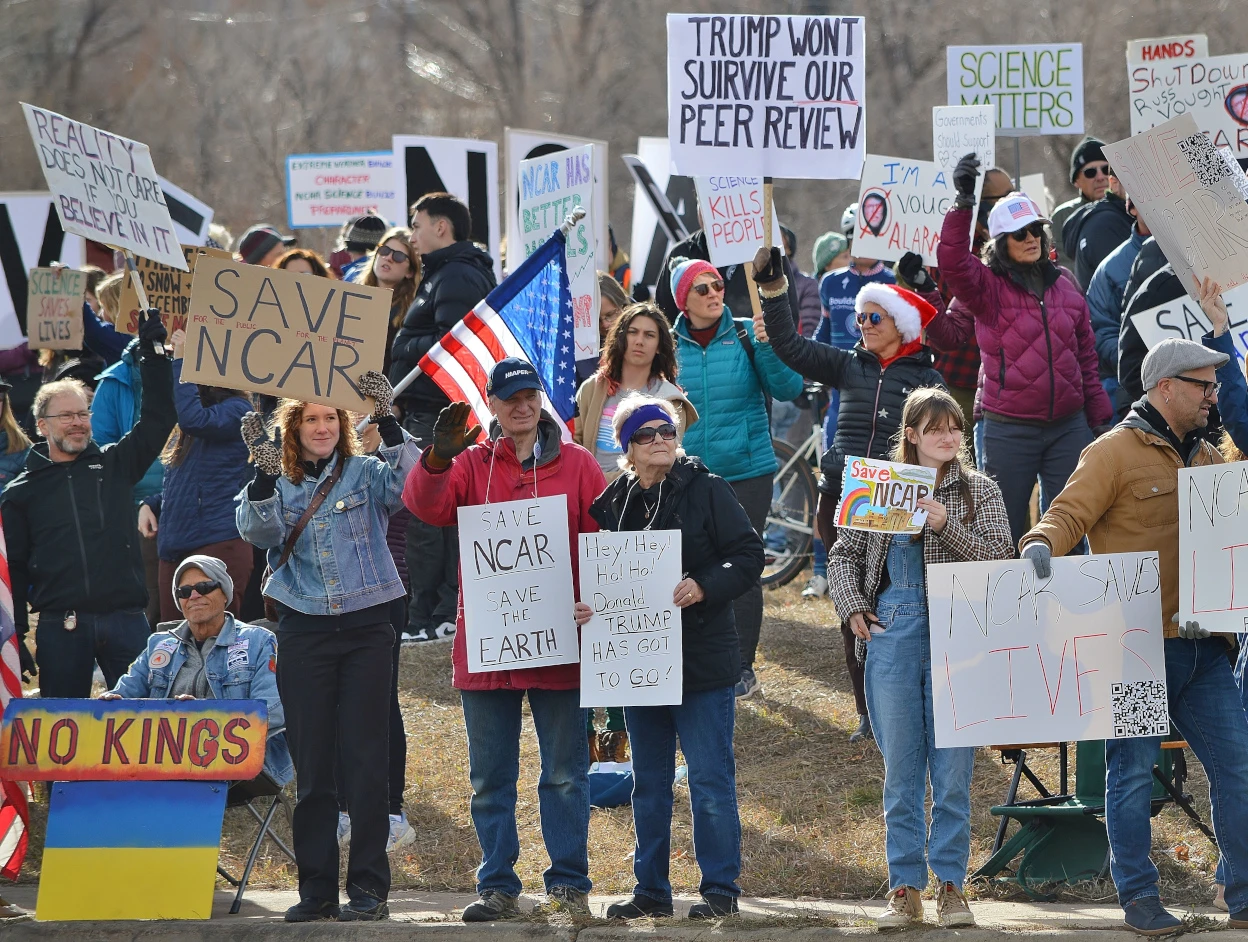
The first year of President Donald Trump’s second term has been marked by a relentless wave of job losses at federal agencies, the cancellation of research grants, and deep funding reductions affecting universities across the United States. For many in the scientific community, the pace and intensity of these changes have been unprecedented. Gretchen Goldman, president and chief executive of the Union of Concerned Scientists (UCS), describes the situation as unlike anything researchers have previously experienced, saying that the scale, speed, and severity of the pressure placed on science has surpassed all historical comparisons.
The Union of Concerned Scientists, a Washington DC–based nonprofit advocacy group, has monitored what it considers political interference with science since the early 2000s, beginning during the George W. Bush administration. According to Goldman, the organization documented 536 federal actions or decisions in 2025 alone that it believes undermined scientific integrity. These included revisions to science-based public guidance, such as changes made to the Centers for Disease Control and Prevention’s information on autism and vaccines. This number is more than double the 207 incidents recorded during Trump’s entire first term from 2017 to 2021. At the same time, researchers working on climate change, vaccine science, LGBTQ+ issues, and health inequality report rising levels of online harassment and intimidation.
Despite the turbulence, some science-reform advocates are searching for constructive paths forward. Brian Nosek, executive director of the Center for Open Science in Charlottesville, Virginia, argues that disruption can sometimes open the door to meaningful reform. However, he cautions that the current climate is defined by widespread distress and actions that appear driven not by a desire to improve science, but by an intent to weaken trust in it. According to Nosek, this creates a uniquely difficult environment for organizations trying to promote transparency and rigor in research.
Goldman takes a far bleaker view, saying that the scientific career pipeline and the stability of federal research jobs have been fundamentally damaged. She describes the system as “shattered,” noting that some researchers have already left the United States in order to continue their work elsewhere. Data from the Nature Careers jobs board has suggested that these departures may signal the early stages of a broader brain drain.
Within federal agencies such as the US Geological Survey (USGS) and the Environmental Protection Agency (EPA), researchers say that scientific output has declined sharply and that evidence-based policymaking has become increasingly uncertain. Several agency scientists, speaking anonymously out of fear of retaliation, report that the loss of experienced staff has disrupted essential work in environmental protection, public health, and safety. They cite examples ranging from narrowed vaccine recommendations at the CDC to efforts by the EPA to roll back soot pollution standards to less stringent levels set in 2020.
Critics argue that these disruptions have been compounded by sweeping reductions in federal research funding, amounting to tens of billions of dollars, which historically supported academic research and the training of future scientists. Goldman emphasizes that sustained investment is essential for progress on complex problems, noting that expertise cannot be developed overnight. At the same time, many international researchers are encountering increasing difficulty obtaining visas to study or work in the United States, further weakening the country’s scientific ecosystem.
In response, some scientists have taken legal action, spoken publicly, or organized collective resistance against what they see as the dismantling of the world’s leading scientific enterprise. In May 2025, the Center for Open Science publicly criticized the administration’s Restoring Gold Standard Science executive order, arguing that it imposed unrealistic standards that could be used to sideline scientific evidence altogether. Nosek says his organization feels a responsibility to oppose any attempts by the government to erode trust in scientific reform or research integrity.
Although the executive branch proposes budgets, Congress ultimately controls federal funding levels. Earlier this month, both chambers of Congress voted to largely reject the administration’s proposed 2026 budget cuts for several major science agencies, including NASA, the USGS, the EPA, and the National Oceanic and Atmospheric Administration. Even so, uncertainty remains high, particularly as China continues to expand its influence and output in global science and technology.
To better understand the impact of these policies, Nature’s careers team interviewed researchers across disciplines about how the past year has shaped their work and career prospects, while also revisiting coverage of Trump’s first year in office.
The scale of workforce reductions at federal science agencies has been extraordinary. Since February of last year, thousands of scientist positions have been eliminated through layoffs, budget cuts, and agency restructuring. Major job losses have occurred at the National Institutes of Health, the EPA, NOAA, the CDC, the Food and Drug Administration, and national laboratories. These cuts were exacerbated by the longest government shutdown in US history, which lasted from October 1 to November 12, 2025. As of now, many agencies are still operating under temporary funding measures while awaiting finalized appropriations for the 2026 fiscal year.
The US Geological Survey has emerged as a central battleground. The administration’s proposed 2026 budget sought to eliminate roughly $300 million in funding and about 1,000 positions from the agency’s Ecosystem Mission Area, which oversees biological research. Although Congress voted to restore most of this funding, uncertainty remains over whether affected researchers will be allowed to resume normal operations. Some USGS scientists say they were prohibited from conducting long-term environmental monitoring if travel costs were involved.
One USGS employee explained that the agency could no longer cover conference attendance or publication fees, severely limiting researchers’ ability to share findings. Another described their department as operating in constant crisis mode after losing a quarter of its staff and having 2025 funding frozen. According to this researcher, projects have been delayed or terminated outright, wasting both time and taxpayer resources, while communication with tribal partners and other agencies has been effectively halted.
For some scientists, the situation has become untenable. A senior biodiversity researcher at NOAA says they are actively seeking employment outside the United States, citing a work environment defined by constant denigration and hostility. As equipment was removed and projects scaled back, they described the outcome as a massive loss of time, money, and scientific opportunity.
The funding crisis has also brought research to a standstill in many academic laboratories. In 2025, more than 7,800 grants from the NIH and the National Science Foundation were disrupted. Of these, 2,600 were permanently terminated, resulting in nearly $1.4 billion in lost funding. Additionally, over 600 EPA grants, together worth more than $28 billion, were canceled, according to publicly compiled grant-tracking data.
Jenna Norton, a program director at the National Institute of Diabetes and Digestive and Kidney Diseases, says the NIH’s grant termination process lacked transparency. Researchers often had no warning that their projects were at risk, leading some to describe the process as sudden and arbitrary. Norton herself was placed on administrative leave after signing a letter protesting the politicization of science at the NIH.
The Department of Health and Human Services has defended its actions, stating that grant decisions are based on alignment with agency priorities, mission goals, and available funding. However, Norton expects further terminations under a policy introduced in October 2025 that allows grants to be canceled if they no longer support agency priorities. This has already affected research on racial health disparities, as some projects examining systemic racism were deemed insufficiently measurable.
Because many NIH-funded studies are designed to run for five years or longer, they often span multiple presidential administrations. Norton says researchers are now forced to choose between halting participant recruitment or risking abrupt project cancellation, which can endanger patients or interrupt critical treatments. She describes this environment as fundamentally incompatible with responsible science.
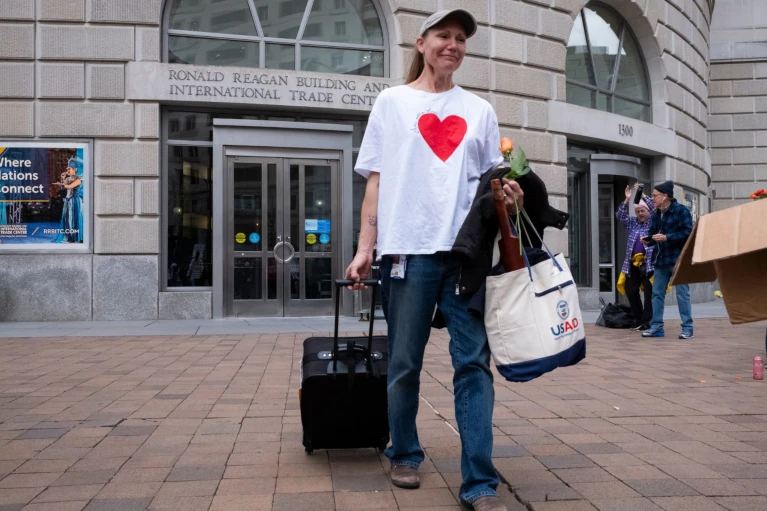
At the university level, the impact has been equally severe. Katie Edwards, a University of Michigan researcher who studies violence against marginalized groups, had ten grants frozen or terminated before successfully suing the federal government to reinstate them. Although much of her funding has since been restored, she has been forced to seek donations and foundation support to keep her lab operational, which she says is not a sustainable solution.
The long-term damage extends to the future scientific workforce. Many universities have reduced PhD admissions for 2026, citing federal funding uncertainty. The Association of American Universities warns that shrinking graduate cohorts will weaken the nation’s scientific competitiveness for years to come.
Aspiring doctoral students like Cole Seither, who works in an ecology lab at the University of California, Santa Cruz, say funding shortages are making it nearly impossible to find advisers willing to take on new students. Seither notes that while ecological research is driven by purpose rather than profit, a lack of financial support threatens to shut the door on the next generation of scientists.
Funding pressures are also undermining tenure protections. At Oregon State University, three tenured faculty members received termination notices after their college lost a major federal contract. Although the university says it is supporting their transition, affected faculty members argue that such actions violate long-standing academic norms.
Across the scientific community, morale has reached historic lows. Katharine Hayhoe, an atmospheric scientist at Texas Tech University, says the treatment of experienced researchers has been devastating. She warns that the operational foundations of American science have been altered in ways that will produce lasting consequences. According to Hayhoe, the true cost of these changes will not be fully understood for many years to come.
Leave a Reply