
Breaking into academia has become increasingly challenging. For early- and mid-career researchers, securing stable academic positions and long-term funding now involves intense competition. One major reason is the growing imbalance between the number of doctoral degrees awarded each year and the limited availability of tenure-track faculty roles.
In the United States, the academic job market has shifted dramatically over the past few decades. Contingent positions, such as adjunct and non-tenure-track roles, rose from 47 percent of university jobs in 1987 to 68 percent by 2021. This trend has contributed to widespread job insecurity among young scholars. Data released last year by the American Association of University Professors showed that more than two-thirds of faculty members at U.S. higher-education institutions held part-time positions or full-time roles without eligibility for tenure in 2023.
As concerns about academic precarity grow, some researchers have turned their attention to retirement policies as a possible solution. Thomas Roulet, a social scientist at the University of Cambridge, argued in a public post last year that academic retirement should be rethought. In his view, retirement does not require abandoning research or teaching entirely, but rather stepping aside from permanent posts to make room for those at the beginning of their careers.
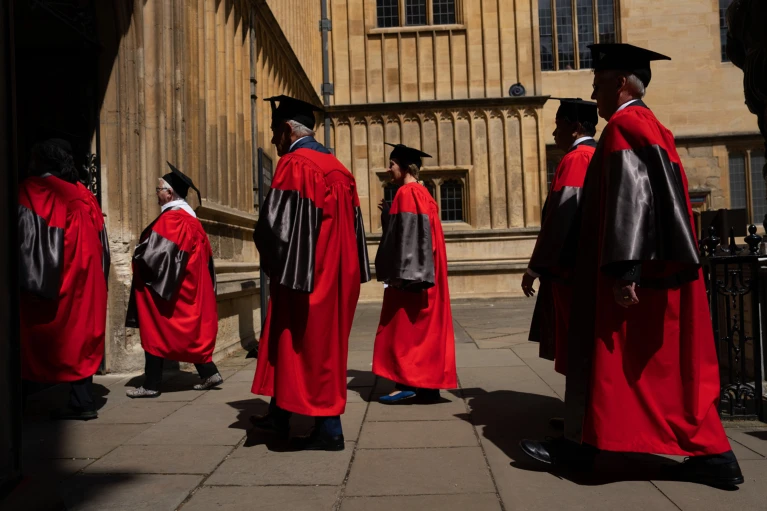
Several universities have already adjusted their retirement rules in an effort to open pathways for younger academics. Both the University of Oxford and the University of Cambridge introduced mandatory retirement ages to increase turnover and create new opportunities. In Spain, professors are required to retire at 70, while in France, faculty members may apply to remain in their roles until the age of 69.
Germany, however, has seen growing disagreement over whether extending academic retirement ages is the right approach. David Spergel, an astrophysicist and president of the Simons Foundation in New York, believes that while retirements can create openings for younger scholars, they should not be imposed. He argues that individuals should have the freedom to decide when to step back, but that choice should be made with consideration for the broader academic ecosystem.
The key question remains whether mandatory retirement policies actually succeed in generating meaningful job opportunities. Researchers who have studied the effects of such policies suggest the results are limited.
Oxford and Cambridge introduced a mandatory retirement age of 67 in the early 2010s, later raising it to 69. This policy, known as the Employer Justified Retirement Age, was designed to support career progression for younger academics by increasing faculty turnover.
In 2023, the University of Cambridge formed a committee to reassess this policy. Its review concluded that eliminating the retirement rule would result in nearly 28 fewer permanent academic positions per year, on average, between 2023 and 2032.
Using the same dataset, economist Oliver Linton and his colleagues estimated that the policy should theoretically increase vacancy creation by about 11 percent. However, when actual hiring data were analyzed, the effect was far smaller. Forced retirements accounted for only a 2.75 percent increase in job openings once voluntary retirements and other departures were excluded.
According to Linton, the policy failed to produce noticeable improvements in academic hiring. He also pointed out that universities have significantly expanded their non-academic staff, which further complicates the picture.
Michelle Silver, a gerontologist at the University of Toronto, shares this skepticism. She notes that in many cases, when senior faculty retire, their positions are eliminated altogether rather than reassigned to new hires.
Mandatory retirement policies have also sparked strong opposition among senior academics. Linton notes that multiple legal challenges have been filed against Cambridge, questioning the policy’s fairness in individual cases.
Many faculty members affected by the rule reported feeling undervalued and personally harmed. The policy can also limit access to research funding years before retirement. Grant applications often require long-term employment contracts, and once researchers reach their mid-sixties, they may become ineligible for multi-year funding simply because their contracts are set to expire.
Silver argues that age is a poor measure of intellectual ability or academic contribution. Assigning an arbitrary endpoint to scholarly work, she says, makes little sense. She also emphasizes that fixed retirement ages may disproportionately disadvantage women, who are more likely to experience career interruptions due to caregiving responsibilities.
Linton agrees, noting that in many fields, academic performance does not suddenly decline at a specific age. He also warns that strict retirement rules in Europe may drive highly accomplished professors to relocate to countries such as the United States, where mandatory retirement is prohibited. Losing experienced scholars, he argues, creates resentment and ultimately harms institutions rather than helping them.
If the goal of retirement policies is to improve prospects for younger academics, researchers suggest that more effective and less discriminatory approaches are needed.
Silver believes universities should focus on preserving institutional knowledge while gradually transitioning responsibilities. She argues that senior scholars should be encouraged to share their experience and remain involved for as long as they wish.
Spergel adds that universities could expand opportunities for emeritus faculty, allowing retired professors to teach specialized courses and stay connected to their departments. He also stresses the importance of transparency, suggesting that institutions should clearly demonstrate that resources freed by retirements are being used to hire new faculty rather than redirected to unrelated priorities.
Leave a Reply