
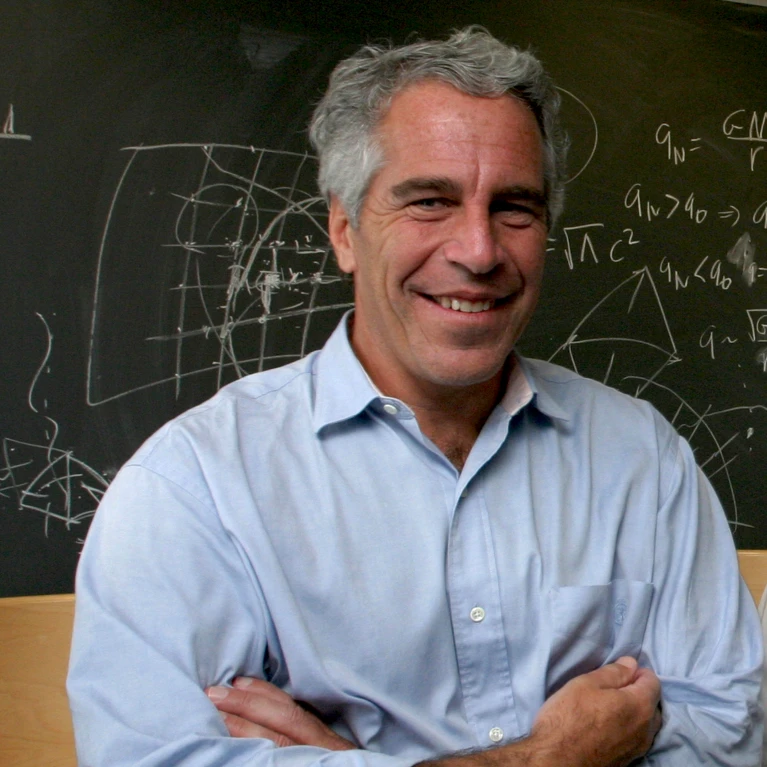
New documents released from the U.S. investigation into convicted sex offender Jeffrey Epstein suggest that his involvement with the scientific world was far more extensive than previously understood.
Epstein, a wealthy financier who died in 2019 while awaiting trial on sex-trafficking charges, spent large sums of money on scientific projects and cultivated relationships with prominent researchers. It was already known that, even after his 2008 conviction for sex crimes, some academics continued to accept his funding and socialize with him, leading to controversy at major institutions. His $800,000 donation to the Massachusetts Institute of Technology, for example, triggered protests that led two scientists to resign and the university to suspend another faculty member.
Last week, the U.S. Department of Justice made public more than three million files related to Epstein, including emails, photographs, and financial records. These materials, released under the Epstein Transparency Act passed by Congress last year, reveal additional scientists who interacted with him. While the documents do not accuse these researchers of participating in any crimes, they illuminate how deeply embedded Epstein was in certain scientific circles.
Among the newly disclosed materials are fresh details about figures already known to have links with Epstein. Theoretical physicist Lawrence Krauss, whose outreach organization received $250,000 from Epstein, appears in correspondence in which Epstein demanded that Krauss avoid commenting to the press about a sexual-misconduct investigation that later cost Krauss his position at Arizona State University. Krauss has said that he sought advice from many people during that period and that he had no awareness of Epstein’s later criminal charges until the financier’s arrest.
The files also show that Epstein kept a list of nearly 30 leading scientists, including Krauss, and that he had contact with some researchers whose connections had not been widely reported before. Harvard physicist Lisa Randall exchanged lighthearted emails with Epstein about his house arrest in 2009–2010 and visited his private Caribbean island in 2014. Randall later stated that she was deeply disturbed by the full scope of allegations against him and regretted staying in touch.
The documents reveal that some scientists approached Epstein directly for funding. In 2013, Stanford virologist Nathan Wolfe proposed that Epstein sponsor a study on undergraduate sexual behavior, describing it as a test of a hypothesis about microbes influencing sexual activity. Wolfe later said that although he discussed the idea with Epstein in person, the project never received money, and that he now recognizes how inappropriate the interaction was.
One of Epstein’s closest academic relationships was with mathematical biologist Martin Nowak. According to Nowak’s own account, Epstein contacted him unexpectedly while he was at the Institute for Advanced Study in Princeton and later invited him to visit his island. Epstein eventually provided $6.5 million to help Nowak establish the Program for Evolutionary Dynamics at Harvard, a research center using mathematics to model evolution. Epstein was heavily involved in the program, frequently visiting and even having an office in its building. Harvard later shut down the center in 2021 amid renewed criticism, though sanctions against Nowak were lifted two years later.
Another key figure in the files is Corina Tarnita, who became Nowak’s doctoral student in 2008. Emails show that she was in contact with Epstein shortly after his conviction and that she provided bank details that allowed him to send $10,000 and $5,000 to two Romanian women. Romanian media reports sparked speculation about the payments, but Tarnita has said they were scholarships for promising young female mathematicians. Princeton University has backed this explanation with corroborating emails from that time. Tarnita has emphasized that she is now appalled by Epstein’s actions and regrets ever meeting him.
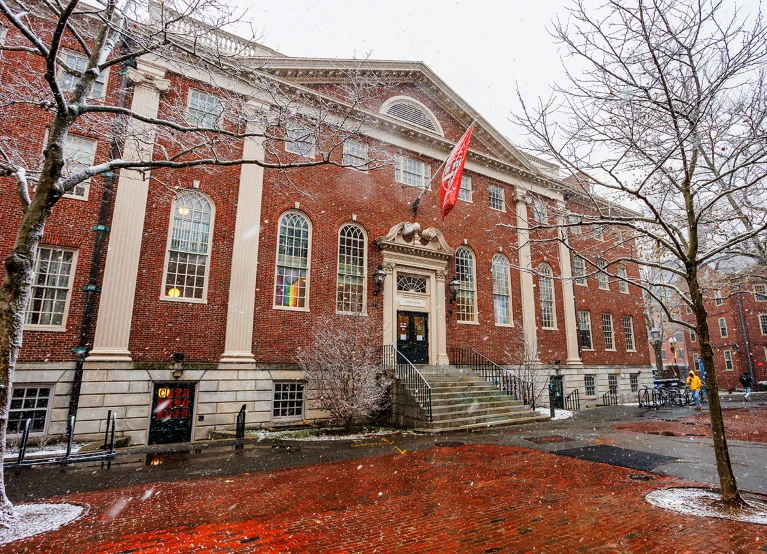
The records also show that Epstein took an active interest in the research conducted by Nowak and Tarnita, regularly discussing scientific ideas with them and suggesting topics that aligned with his own interests. When their work was accepted by a major journal in 2010, Nowak even shared draft proofs with Epstein before publication, and Epstein offered advice on handling criticism.
Some scholars who had no ties to Epstein say the revelations highlight broader concerns about private funding in academia. Jesse Kass, a mathematician at the University of California, Santa Cruz, who was at Harvard during much of this period, noted that it is highly unusual for a donor to be so deeply involved in the actual research process. He argued that universities need to reflect seriously on what went wrong and how to prevent similar situations in the future.
Harvard University and Martin Nowak have declined to comment on the newly released documents.
Leave a Reply