
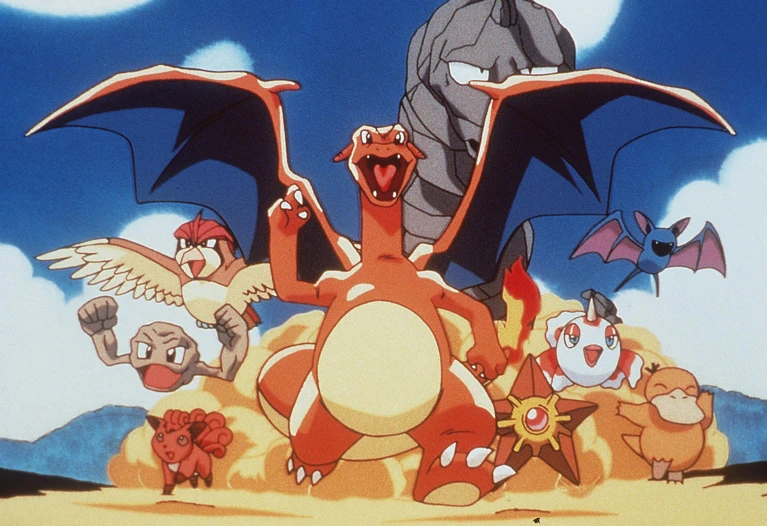
On 27 February 1996, Japanese game designer Satoshi Tajiri launched the first Pokémon titles on the Pokémon Red and Green for the Game Boy. What began as Tajiri’s childhood fascination with collecting insects gradually evolved into one of the most influential entertainment franchises in history. Beneath its colorful creatures and imaginative battles lies a surprisingly strong connection to science, from biology and paleontology to ecology and classification.
Nearly three decades later, the Pokémon universe continues to intersect with academic research. Its fictional creatures and ecosystems have inspired discussions in fields such as evolution, biodiversity, fossil studies, science education, and even academic publishing ethics. For many scientists who grew up in the late 1990s and early 2000s, Pokémon was not just a game or television show, but an early gateway to understanding the natural world.
Arjan Mann, assistant curator of fossil fishes and early tetrapods at the Field Museum in Chicago, recalls how the animated series shaped his imagination. As a child, he encountered Pokémon before he fully understood real-world zoology. The creatures he saw on screen influenced his earliest concepts of animals and natural history, forming a bridge between fantasy and scientific curiosity. In many ways, Pokémon offered an accessible entry point into scientific thinking long before he formally studied paleontology.
Collecting, classifying, discovering
The famous Pokémon slogan “Gotta catch ’em all” resonates deeply with researchers in taxonomy and entomology. Spencer Monckton, a research scientist at the University of Guelph in Canada, grew up playing the games and watching the series. He notes that the central activity in Pokémon—finding, collecting, and cataloging diverse species—closely mirrors the work of an entomologist in the field.
In both cases, success depends on careful observation, documentation, and comparison. Pokémon players must recognize distinguishing traits, categorize creatures by type, and understand how their characteristics interact. This process parallels taxonomy, the scientific discipline dedicated to classifying living organisms. Identifying patterns, noting differences, and organizing biodiversity into meaningful systems are fundamental both to the game and to biological science.
Monckton’s professional life eventually reflected his childhood hobby in an unexpected way. While pursuing a master’s degree, he spent months in Chile collecting bees from remote areas. Through morphological analysis and DNA sequencing of species within the Heteroediscelis subgenus of Chilicola, he identified eight previously unknown species. One specimen had a striking elongated face reminiscent of a dragon’s snout. Drawing inspiration from his youth, Monckton named it Chilicola charizard, referencing Charizard, the iconic fire-breathing dragon Pokémon. The choice illustrates how early cultural influences can subtly shape scientific creativity.
From fossils to fictional creatures
Fossils have always played a notable role in the Pokémon universe. Certain Pokémon are “revived” from ancient remains, reflecting real paleontological practices. Recognizing this connection, the Field Museum has developed an exhibition exploring the parallels between Pokémon species and the prehistoric life forms that inspired them.
The franchise’s Pokédex now includes over a thousand species, a dramatic expansion from the original 151 creatures. Many Pokémon are clearly modeled on real animals, and in some cases, scientific nomenclature has even been influenced by the franchise. For example, the Pokémon Aerodactyl resembles extinct flying reptiles known as pterosaurs. Genera such as Pterodactylus and Aerodactylus reflect similar naming traditions, with Aerodactylus itself formally described in 2014. Although pterosaurs are often grouped with dinosaurs in popular culture, they represent a distinct lineage of prehistoric flying reptiles.
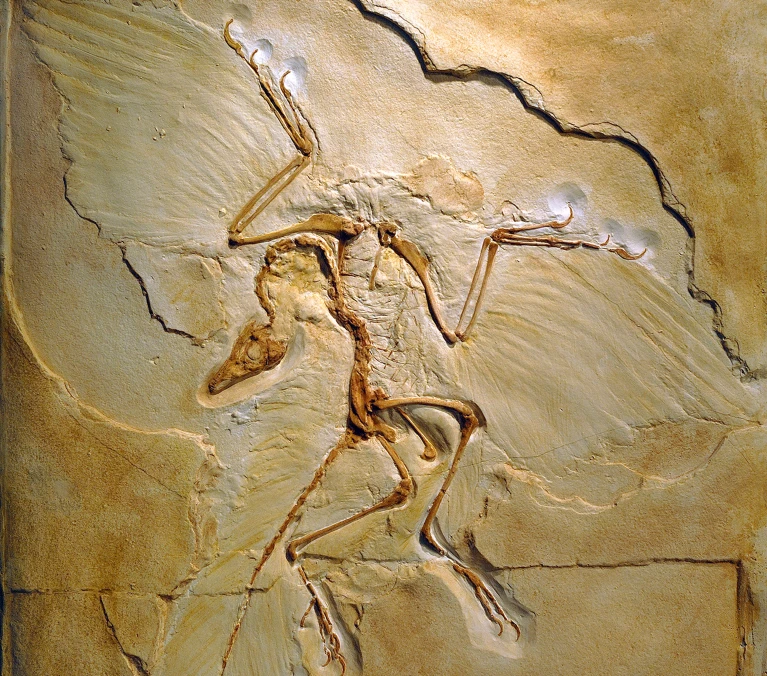
Another example is Archeops, a Pokémon inspired by Archaeopteryx, a 150-million-year-old fossil species long regarded as a transitional form between non-avian dinosaurs and modern birds. By presenting such parallels, museums and educators are able to spark public interest in paleontology through familiar cultural references. Pokémon becomes a narrative tool that helps audiences engage with evolutionary history.
Gaming as an educational strategy
Beyond inspiring individual scientists, Pokémon has influenced formal science education. A 2002 survey of British schoolchildren aged 4 to 11 revealed that participants could identify significantly more Pokémon species than native wildlife. The findings highlighted a troubling gap in ecological awareness, but they also suggested an opportunity: if children could memorize hundreds of fictional creatures, they could potentially learn real biodiversity through similar methods.
In response, researchers developed a trading-card game called Phylo, designed to teach ecological principles through gameplay. Inspired by Pokémon’s mechanics, Phylo challenges players to build balanced food webs, maintain ecosystem stability, and respond to environmental disruptions such as climate change or oil spills. The competitive structure encourages strategic thinking while reinforcing scientific concepts.
Meggie Callahan, a specialist in human–wildlife relationships at the University of Washington, has studied the impact of Phylo on conservation education. In a 2019 study, she and her colleagues found that students who learned through the card game were better able to recall species information compared with those taught using traditional slideshow presentations. The interactive format appeared to strengthen memory retention and deepen understanding of ecological relationships. By engaging emotionally and competitively with the material, students formed stronger cognitive connections.
Exposing predatory publishing through play
The influence of Pokémon extends even into debates about academic integrity. Matan Shelomi, an entomologist at National Taiwan University in Taipei and an occasional player of Pokémon Go, used the franchise in an unconventional campaign against predatory journals. These journals solicit submissions and publication fees while failing to conduct proper peer review, undermining scientific credibility.
Beginning in 2019, Shelomi submitted deliberately fabricated papers to journals he suspected of unethical practices. The manuscripts contained fictional data, invented citations, and co-authors drawn from the Pokémon universe, including Professor Samuel Oak. Some papers focused on imaginary environmental studies in fictional cities, while others humorously explored topics such as sedation techniques inspired by Jigglypuff’s singing or the expression of a protein humorously linked to Pikachu.
Several of these submissions were accepted and published online without meaningful review, exposing the lack of editorial standards. By leveraging the popularity and recognizability of Pokémon, Shelomi drew public attention to the issue. Although he acknowledges that individual actions cannot eliminate predatory publishing, he believes creative approaches can raise awareness, especially when they connect scientific concerns with familiar cultural symbols.
A cultural bridge between imagination and inquiry
As Pokémon approaches its thirtieth anniversary, its scientific echoes remain striking. What began as a childhood pastime about collecting fantastical creatures has influenced museum exhibitions, taxonomic discoveries, conservation education, and discussions about research ethics. For many scientists, Pokémon was not merely entertainment but a formative experience that encouraged curiosity, systematic thinking, and a love of biodiversity.
The franchise demonstrates how popular culture can intersect meaningfully with academia. By transforming the act of collecting insects into a global narrative about exploration and discovery, Satoshi Tajiri inadvertently created a bridge between imagination and empirical inquiry. In an era when science communication faces growing challenges, the enduring appeal of Pokémon suggests that play, storytelling, and creativity can still inspire the next generation of researchers.
Leave a Reply