
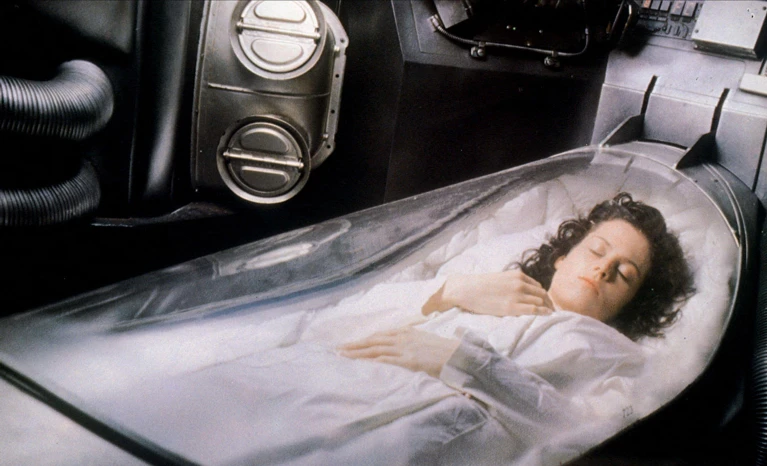
A recurring idea in science fiction is the frozen time traveler—someone preserved in cryogenic suspension, only to awaken decades or even centuries later with their mind and body fully intact. While this concept remains largely fictional, scientific research is gradually exploring the boundaries of cryopreservation and revival, particularly in brain tissue.
Researchers working with the brains of humans and other animals, mostly young vertebrates, have shown that neurons can survive freezing at a cellular level and retain some functionality after thawing. However, fully restoring the complex processes essential for proper brain function—such as neuronal firing, metabolism, and plasticity—has so far remained out of reach.
A German research team has now reported a breakthrough in preserving some brain functionality after cryopreservation in mice. Published on March 3 in Proceedings of the National Academy of Sciences, the study describes a technique called vitrification, which freezes tissue in a glass-like state, paired with a thawing process that keeps cells alive.
“If brain function emerges from its physical structure, how can it be revived after complete molecular shutdown?” asks Alexander German, a neurologist at the University of Erlangen–Nuremberg and lead author of the study. He suggests that the findings could one day open doors to protecting brains from disease or severe injury, establishing organ banks, and potentially even achieving whole-body cryopreservation in mammals.
Mechanical engineering researcher Mrityunjay Kothari at the University of New Hampshire agrees that the work pushes the limits of brain tissue cryopreservation. “This kind of progress gradually turns science fiction into scientific possibility,” he says, while noting that applications such as storing large organs or whole mammals remain far beyond current capabilities.
Preserving Brain Function
The primary challenge in freezing brains lies in ice crystal formation, which disrupts delicate nanostructures and cellular processes. “Beyond ice, we also face osmotic stress and toxicity from cryoprotectants,” German explains.
To address this, the team used vitrification, an ice-free method of cryopreservation. By cooling liquids rapidly, molecules are trapped in a glass-like, disordered state before ice crystals can form. “We wanted to test whether function could resume after complete cessation of molecular mobility in the vitreous state,” German says.
Initial experiments focused on 350-micrometer slices of mouse brains, including the hippocampus, a central hub for memory and spatial navigation. The slices were treated with cryoprotective chemicals, cooled quickly using liquid nitrogen at −196 ºC, and stored at −150 ºC in a glass-like state for periods ranging from ten minutes to seven days.
After thawing in warm solutions, the researchers examined the slices for functional activity. Microscopy confirmed intact neuronal and synaptic membranes, while mitochondrial tests showed no metabolic damage. Electrical recordings indicated that neuronal responses to stimuli were largely preserved, with only minor deviations from control samples.
Hippocampal neurons also retained the ability for long-term potentiation, the strengthening of synaptic connections underlying learning and memory. Observations were limited to a few hours due to the natural degradation of brain slices, but the results were promising.
The method was later scaled up to whole mouse brains, stored in a vitreous state at −140 ºC for up to eight days. The team had to adjust the protocol repeatedly to reduce brain shrinkage and mitigate cryoprotectant toxicity. When thawed, hippocampal slices again demonstrated functional neuronal pathways capable of long-term potentiation, though it remained impossible to determine whether the mice retained memories.
From Mice to Humans
German’s team is now testing the method on human brain tissue. “We already have preliminary data showing viability in human cortical tissue,” he notes. The researchers are also exploring applications for whole-organ cryopreservation, especially the heart.
However, Kothari cautions that the success rate for whole-brain protocols was low and may not scale easily to human organs, which present additional challenges such as heat transfer and mechanical stress that can cause cracking.
German emphasizes that “improved vitrification solutions, as well as better cooling and rewarming techniques, will be required before these principles can be applied to large human organs.”
While full human cryopreservation remains a distant goal, the study marks an important step toward turning the frozen time traveler from a staple of science fiction into a scientific possibility.
Leave a Reply